Human Osteopontin/OPN Antibody Summary
*Small pack size (-SP) is supplied either lyophilized or as a 0.2 µm filtered solution in PBS.
Applications
This antibody functions as an ELISA detection antibody when paired with Mouse Anti-Human Osteopontin/OPN Monoclonal Antibody (Catalog # MAB14332R).
This product is intended for assay development on various assay platforms requiring antibody pairs. We recommend the Human Osteopontin (OPN) DuoSet ELISA Kit (Catalog # DY1433) for convenient development of a sandwich ELISA or the Human Osteopontin (OPN) Quantikine ELISA Kit (Catalog # DOST00) for a complete optimized ELISA.
Please Note: Optimal dilutions should be determined by each laboratory for each application. General Protocols are available in the Technical Information section on our website.
Scientific Data
 View Larger
Osteopontin/OPN in HepG2 Human Cell Line. Osteopontin/OPN was detected in immersion fixed HepG2 human hepatocellular carcinoma cell line (positive staining; left panel) and Daudi human Burkitt's lymphoma cell line (negative staining; right panel) using Goat Anti-Human Osteopontin/OPN Antigen Affinity-purified Polyclonal Antibody (Catalog # AF1433) at 1.7 µg/mL for 3 hours at room temperature. Cells were stained using the NorthernLights™ 557-conjugated Anti-Goat IgG Secondary Antibody (red; Catalog # NL001) and counterstained with DAPI (blue). Specific staining was localized to cytoplasm. View our protocol for Fluorescent ICC Staining of Cells on Coverslips.
 View Larger
Osteopontin/OPN in Human Breast Cancer Tissue. Osteopontin/OPN was detected in immersion fixed paraffin-embedded sections of human breast cancer tissue using 8 µg/mL Goat Anti-Human Osteopontin/OPN Antigen Affinity-purified Polyclonal Antibody (Catalog # AF1433) overnight at 4 °C. Tissue was stained with the Anti-Goat HRP-DAB Cell & Tissue Staining Kit (brown; Catalog # CTS008) and counterstained with hematoxylin (blue). Specific labeling was localized to the surface of epithelial cells in the intralobular duct. View our protocol for Chromogenic IHC Staining of Paraffin-embedded Tissue Sections.
 View Larger
Osteopontin/OPN in Human Breast Cancer Tissue. Osteopontin/OPN was detected in immersion fixed paraffin-embedded sections of human breast cancer tissue using Goat Anti-Human Osteopontin/OPN Antigen Affinity-purified Polyclonal Antibody (Catalog # AF1433) at 15 µg/mL overnight at 4 °C. Tissue was stained using the Anti-Goat HRP-DAB Cell & Tissue Staining Kit (brown; Catalog # CTS008) and counterstained with hematoxylin (blue). Lower panel shows a lack of labeling if primary antibodies are omitted and tissue is stained only with secondary antibody followed by incubation with detection reagents. View our protocol for Chromogenic IHC Staining of Paraffin-embedded Tissue Sections.
 View Larger
Cell Adhesion Mediated by Osteopontin/OPN and Neutralization by Human Osteopontin/OPN Antibody. Recombinant Human Osteopontin/OPN (Catalog # 1433-OP), immobilized onto a microplate, supports the adhesion of the HEK293 human embryonic kidney cell line in a dose-dependent manner (orange line). Adhesion elicited by Recombinant Human Osteopontin/OPN (1 µg/mL) is neutralized (green line) by increasing concentrations of Goat Anti-Human Osteopontin/OPN Antigen Affinity-purified Polyclonal Antibody (Catalog # AF1433). The ND50 is typically 0.300 - 3.60 µg/mL.
 View Larger
Human Osteopontin/OPN ELISA Standard Curve. Recombinant Human Osteopontin/OPN protein was serially diluted 2-fold and captured by Mouse Anti-Human Osteopontin/OPN Monoclonal Antibody (Catalog # MAB14332R) coated on a Clear Polystyrene Microplate (Catalog # DY990). Goat Anti-Human Osteopontin/OPN Antigen Affinity-purified Polyclonal Antibody (Catalog # AF1433) was biotinylated and incubated with the protein captured on the plate. Detection of the standard curve was achieved by incubating Streptavidin-HRP (Catalog # DY998) followed by Substrate Solution (Catalog # DY999) and stopping the enzymatic reaction with Stop Solution (Catalog # DY994).
 View Larger
Detection of Osteopontin/OPN in Human Kidney. Formalin-fixed paraffin-embedded tissue sections of human kidney were probed for OPN mRNA (ACD RNAScope Probe, catalog #420101; Fast Red chromogen, ACD catalog # 322750). Adjacent tissue section was processed for immunohistochemistry using goat anti-human OPN polyclonal antibody (R&D Systems catalog # AF1433) at 1ug/mL with overnight incubation at 4 degrees Celsius followed by incubation with anti-goat IgG VisUCyte HRP Polymer Antibody (Catalog # VC004) and DAB chromogen (yellow-brown). Tissue was counterstained with hematoxylin (blue). Specific staining was localized to cytoplasm in tubules.
 View Larger
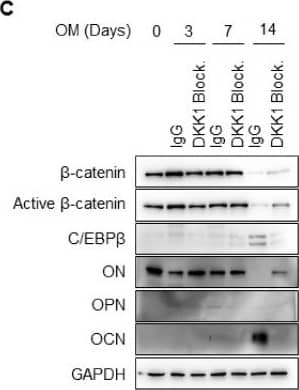
Detection of Human Osteopontin/OPN by Western Blot DKK1 blockade inhibits mineralization of osteoblast differentiation. Osteoblasts were treated with 1 μg anti-DKK1 or IgG as controls during osteoblast differentiation (n = 3). At indicated days, analysis of (A) results of ALP and ARS staining; scale bar is 200 μm, (B) hydroxyapatite staining; BF, Bright Field; HA, Hydroxyapatite; Scale bar is 500 μm, (C) immunoblotting for proteins, and (D) qPCR for mRNA. Representative data are shown (n = 3). * p < 0.05 (mean ± SD; n = 3). Image collected and cropped by CiteAb from the following open publication (https://pubmed.ncbi.nlm.nih.gov/31963554), licensed under a CC-BY license. Not internally tested by R&D Systems.
 View Larger
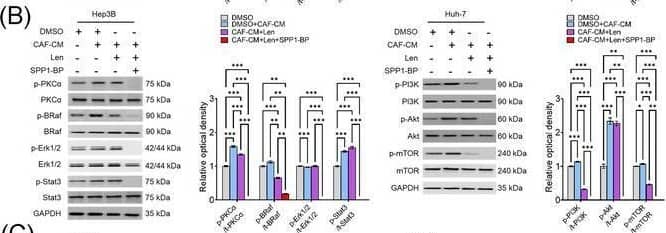
Detection of Osteopontin/OPN by Western Blot Molecular mechanism underlying CAF‐derived SPP1‐induced resistance to sorafenib or lenvatinib. (A‐B) Changes in the expression levels of PKC alpha, BRAF/ERK/STAT3, and PI3K/AKT/mTOR pathway proteins in CAF‐CM‐incubated Huh‐7 cells treated with sorafenib (15 μmol/L; A) or lenvatinib alone (5 μmol/L; B) and in combination with SPP1‐BP. (C‐D) Changes in the phosphorylation of AKT, mTOR, BRAF, and ERK1/2 under ITGB1 and/or ITGB5 silencing in Hep3B and Huh‐7 cells treated with sorafenib (C) or lenvatinib (D) in combination with CAF‐CM. (Mean ± SEM; Two‐way ANOVA test; *P < 0.05; **P < 0.01; ***P < 0.001).Abbreviations: DMSO, dimethyl sulfoxide; CAF, cancer‐associated fibroblast; CM, culture medium; Sor, sorafenib; SPP1‐BP, SPP1‐blocking peptide, PKC alpha, protein kinase C alpha ; BRAF,v‐Raf murine sarcoma viral oncogene homolog B; ERK, extracellular signal‐related kinase; STAT3, signal transducer and activator of transcription 3; GAPDH, glyceraldehyde 3‐phosphate dehydrogenase; PI3K, phosphatidylinositol‐3‐kinase; AKT, protein kinase B; mTOR, mammalian target of rapamycin; Len, lenvatinib; siCtrl, negative control; ITGB1, integrin subunit beta 1; ITGB5, integrin subunit beta 5. Image collected and cropped by CiteAb from the following open publication (https://pubmed.ncbi.nlm.nih.gov/36919193), licensed under a CC-BY license. Not internally tested by R&D Systems.
 View Larger
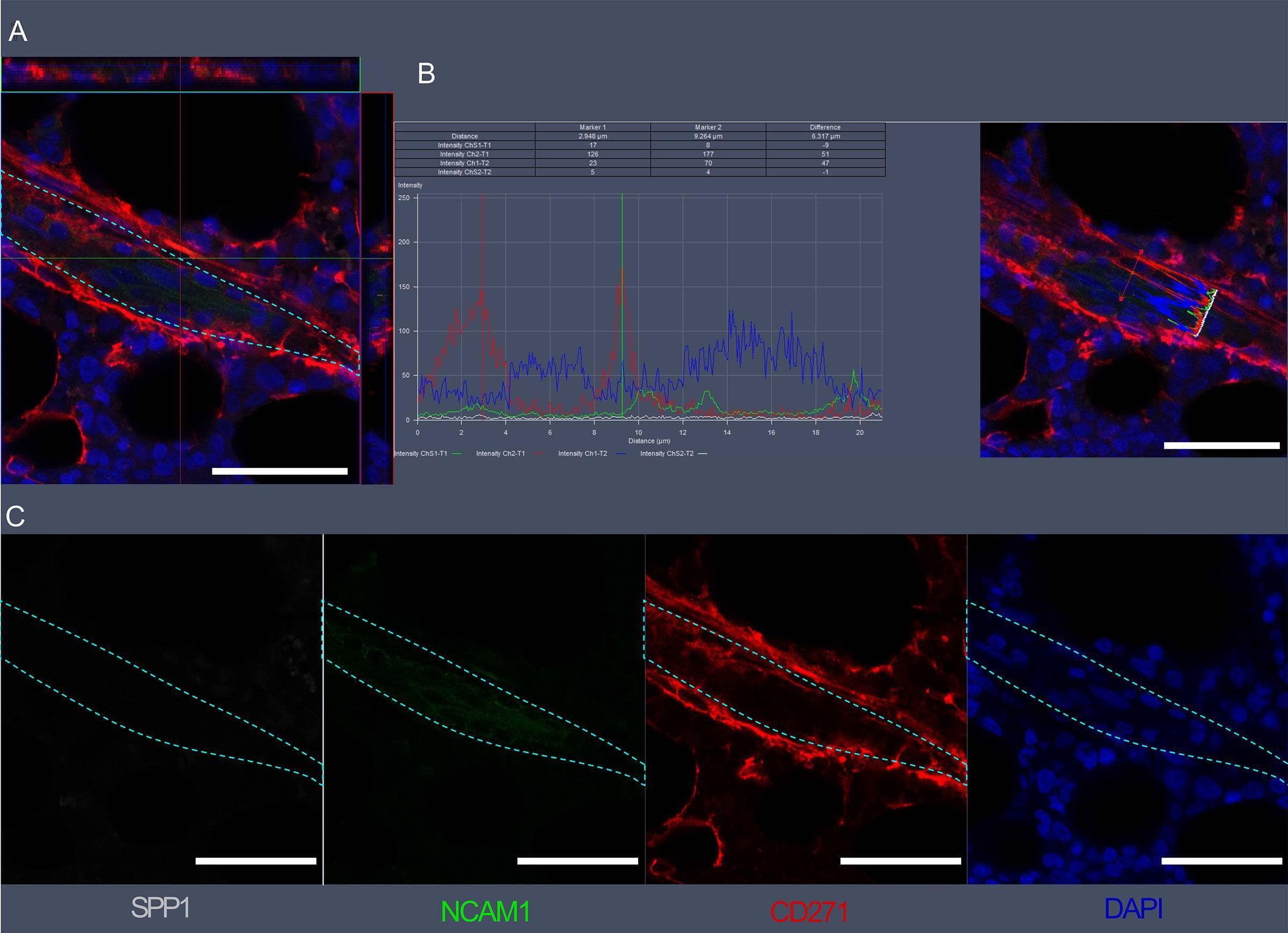
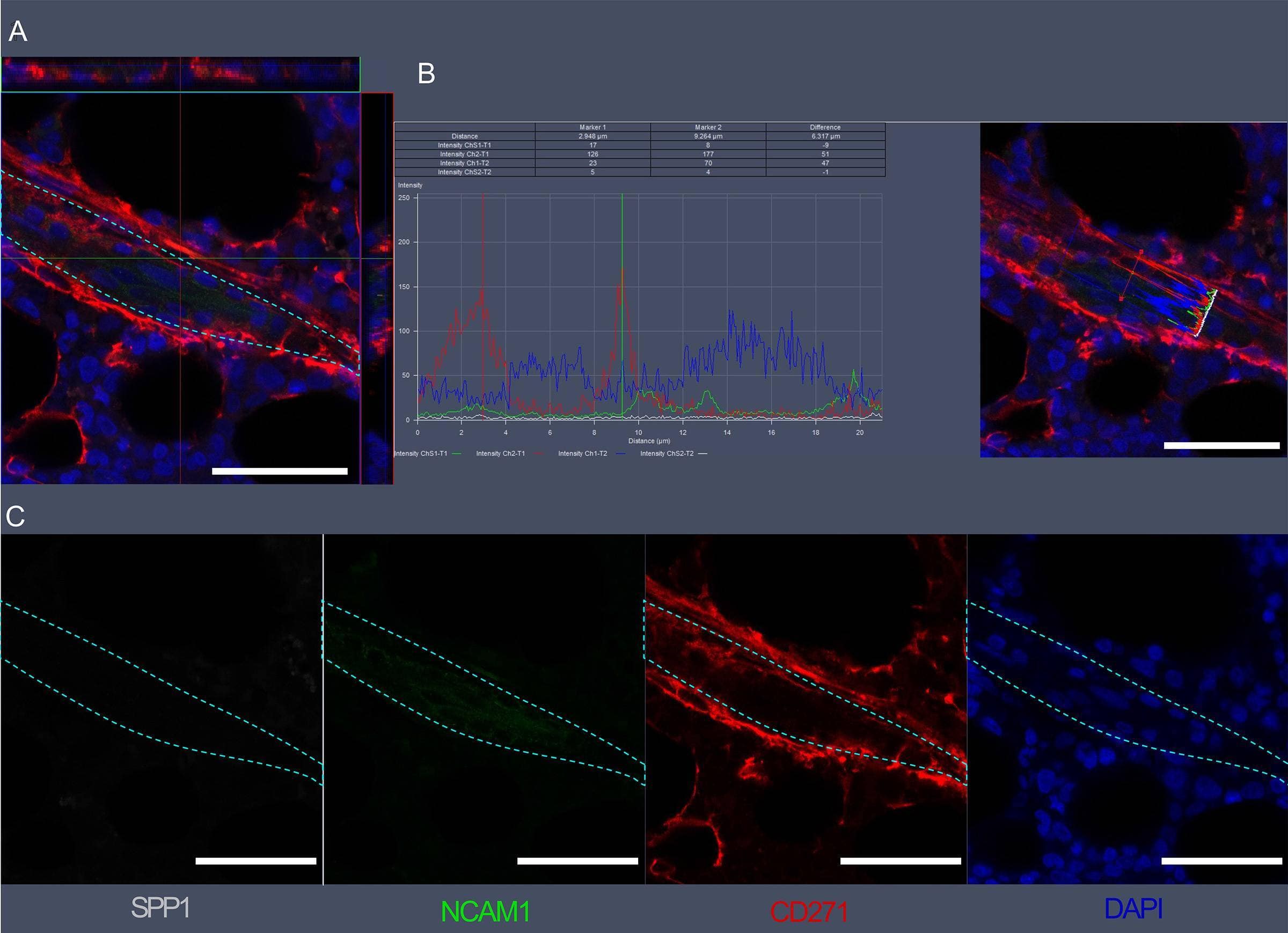
Detection of Osteopontin/OPN by Immunohistochemistry Visualization of SPP1, NCAM1, and CD271 expression in bone marrow vascular regions by confocal microscopy.(A) Confocal scan of vascular region in BM biopsies with 3D orthographic cross-section view, co-stained with rabbit anti-NCAM1, mouse anti-CD271, goat anti-SPP1, and DAPI. (B) Intensity profile for all channels in A across a cell of interest in a representative z plane. (C) Single channel data for the florescent markers in A. Scale bars represent 50 μm. Cyan dashed lines indicate vessel surface. Image collected and cropped by CiteAb from the following open publication (https://pubmed.ncbi.nlm.nih.gov/36876630), licensed under a CC-BY license. Not internally tested by R&D Systems.
 View Larger
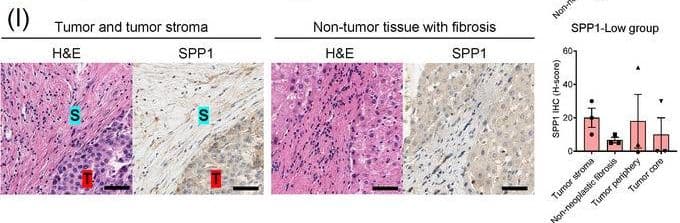
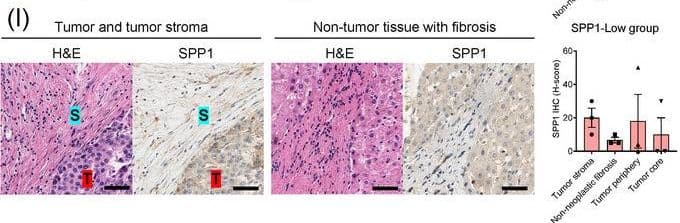
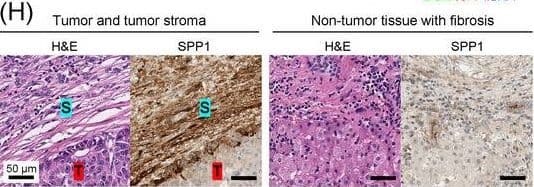
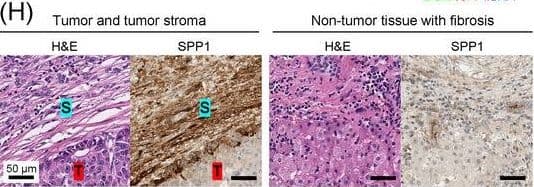
Detection of Osteopontin/OPN by Immunohistochemistry Identification of the CAF‐derived molecules that induce resistance to sorafenib or lenvatinib in patients with HCC. (A) Heat map of 790 genes overexpressed in CAFs. (B) GSEA of the genes overexpressed in CAFs. (C) Process of candidate gene selection. (D) Expression levels of the 9 candidate genes according to sorafenib response in the GSE109211 dataset. (E) Comparison of SPP1 expression between sorafenib responders and non‐responders in the GSE109211 and GSE143233 datasets. (F) Immunofluorescence staining of alpha ‐SMA and SPP1 in tumor tissues from patients with HCC. (G) Comparison of SPP1 expression between CAFs and their paired para‐cancer fibroblasts in the WTS data from the 9 pairs of CAF and para‐cancer fibroblasts. (H) Representative H&E and SPP1 IHC images of the tumor (T), tumor stroma (S) (left), and non‐tumor fibrous tissue (middle) in an SPP1‐high patient. Scale bar, 50 μm. Comparison of SPP1 IHC staining intensity according to tumor location in the SPP1‐high group (right). (I) Representative H&E and SPP1 IHC images of tumor (T), tumor stroma (S) (left), and non‐tumor fibrous tissue (middle) in an SPP1‐low patient. Comparison of SPP1 IHC staining intensity according to tumor location in the SPP1‐low group (right). (Mean ± SEM; unpaired Welch's t‐test; *P < 0.05; **P < 0.01; ***P < 0.001).Abbreviations: HCC, hepatocellular carcinoma; NF, normal fibroblast; CAFs, cancer‐associated fibroblasts; ELISA, enzyme linked immunosorbent assay; H&E, hematoxylin and eosin; alpha ‐SMA, alpha smooth muscle actin; SPP1, secreted phosphoprotein 1; DAPI, 4′, 6‐diamidino‐2‐phenylindole; PAF, para‐cancer fibroblast; S, tumor stroma; T, tumor; IHC, immunohistochemistry. Image collected and cropped by CiteAb from the following open publication (https://pubmed.ncbi.nlm.nih.gov/36919193), licensed under a CC-BY license. Not internally tested by R&D Systems.
 View Larger
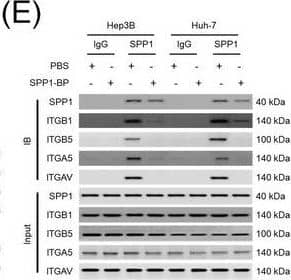
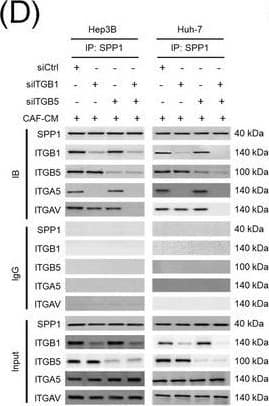
Detection of Osteopontin/OPN by Western Blot Integrin complexes (integrin alpha V beta 5, alpha 5 beta 1, and alpha V beta 1) on HCC cells were identified as binding proteins of SPP1. (A) Western blotting of SPP1 receptor‐binding protein expression in HCC cells. (B) Measurement of CD44 and integrin expression in Hep3B and Huh‐7 cells by fluorescent intensity. (C‐E) Co‐IP of SPP1 after CAF‐CM treatment, followed by Western blotting for SPP1, ITGA5, ITGAV, ITGB1, and ITGB5 in HCC cells (C), HCC cells silenced for ITGB1 and/or ITGB5 (D), and HCC cells incubated with/without SPP1‐BP (E).Abbreviations: ITGA4, integrin subunit alpha 4; ITGA5, integrin subunit alpha 5; ITGA8, integrin subunit alpha 8; ITGA9, integrin subunit alpha 9; ITGAV, integrin subunit alpha V; ITGB1, integrin subunit beta 1; ITGB3, integrin subunit beta 3; ITGB5, integrin subunit beta ; GAPDH, glyceraldehyde 3‐phosphate dehydrogenase; RFU, relative fluorescence units; IgG, immunoglobulin G; SPP1, secreted phosphoprotein 1; CAF, cancer‐associated fibroblast; CM, culture medium; IB, immunoblotting; siCtrl, negative control; SPP1‐BP, SPP1‐blocking peptide. Image collected and cropped by CiteAb from the following open publication (https://pubmed.ncbi.nlm.nih.gov/36919193), licensed under a CC-BY license. Not internally tested by R&D Systems.
 View Larger
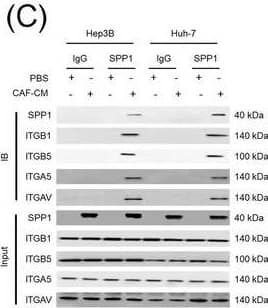
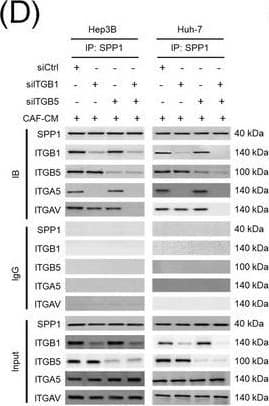
Detection of Osteopontin/OPN by Western Blot Integrin complexes (integrin alpha V beta 5, alpha 5 beta 1, and alpha V beta 1) on HCC cells were identified as binding proteins of SPP1. (A) Western blotting of SPP1 receptor‐binding protein expression in HCC cells. (B) Measurement of CD44 and integrin expression in Hep3B and Huh‐7 cells by fluorescent intensity. (C‐E) Co‐IP of SPP1 after CAF‐CM treatment, followed by Western blotting for SPP1, ITGA5, ITGAV, ITGB1, and ITGB5 in HCC cells (C), HCC cells silenced for ITGB1 and/or ITGB5 (D), and HCC cells incubated with/without SPP1‐BP (E).Abbreviations: ITGA4, integrin subunit alpha 4; ITGA5, integrin subunit alpha 5; ITGA8, integrin subunit alpha 8; ITGA9, integrin subunit alpha 9; ITGAV, integrin subunit alpha V; ITGB1, integrin subunit beta 1; ITGB3, integrin subunit beta 3; ITGB5, integrin subunit beta ; GAPDH, glyceraldehyde 3‐phosphate dehydrogenase; RFU, relative fluorescence units; IgG, immunoglobulin G; SPP1, secreted phosphoprotein 1; CAF, cancer‐associated fibroblast; CM, culture medium; IB, immunoblotting; siCtrl, negative control; SPP1‐BP, SPP1‐blocking peptide. Image collected and cropped by CiteAb from the following open publication (https://pubmed.ncbi.nlm.nih.gov/36919193), licensed under a CC-BY license. Not internally tested by R&D Systems.
 View Larger
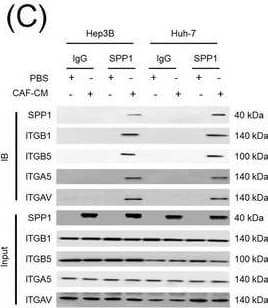
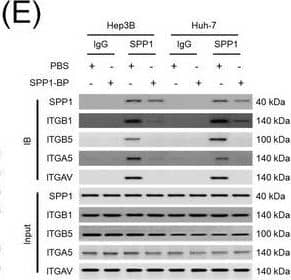
Detection of Osteopontin/OPN by Western Blot Integrin complexes (integrin alpha V beta 5, alpha 5 beta 1, and alpha V beta 1) on HCC cells were identified as binding proteins of SPP1. (A) Western blotting of SPP1 receptor‐binding protein expression in HCC cells. (B) Measurement of CD44 and integrin expression in Hep3B and Huh‐7 cells by fluorescent intensity. (C‐E) Co‐IP of SPP1 after CAF‐CM treatment, followed by Western blotting for SPP1, ITGA5, ITGAV, ITGB1, and ITGB5 in HCC cells (C), HCC cells silenced for ITGB1 and/or ITGB5 (D), and HCC cells incubated with/without SPP1‐BP (E).Abbreviations: ITGA4, integrin subunit alpha 4; ITGA5, integrin subunit alpha 5; ITGA8, integrin subunit alpha 8; ITGA9, integrin subunit alpha 9; ITGAV, integrin subunit alpha V; ITGB1, integrin subunit beta 1; ITGB3, integrin subunit beta 3; ITGB5, integrin subunit beta ; GAPDH, glyceraldehyde 3‐phosphate dehydrogenase; RFU, relative fluorescence units; IgG, immunoglobulin G; SPP1, secreted phosphoprotein 1; CAF, cancer‐associated fibroblast; CM, culture medium; IB, immunoblotting; siCtrl, negative control; SPP1‐BP, SPP1‐blocking peptide. Image collected and cropped by CiteAb from the following open publication (https://pubmed.ncbi.nlm.nih.gov/36919193), licensed under a CC-BY license. Not internally tested by R&D Systems.
 View Larger
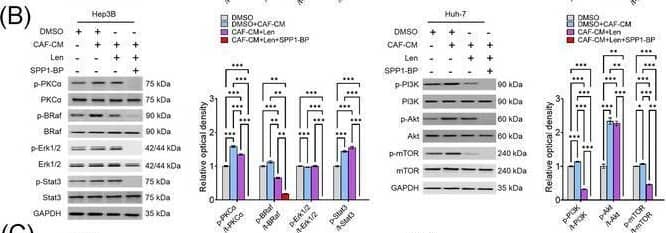
Detection of Osteopontin/OPN by Western Blot Molecular mechanism underlying CAF‐derived SPP1‐induced resistance to sorafenib or lenvatinib. (A‐B) Changes in the expression levels of PKC alpha, BRAF/ERK/STAT3, and PI3K/AKT/mTOR pathway proteins in CAF‐CM‐incubated Huh‐7 cells treated with sorafenib (15 μmol/L; A) or lenvatinib alone (5 μmol/L; B) and in combination with SPP1‐BP. (C‐D) Changes in the phosphorylation of AKT, mTOR, BRAF, and ERK1/2 under ITGB1 and/or ITGB5 silencing in Hep3B and Huh‐7 cells treated with sorafenib (C) or lenvatinib (D) in combination with CAF‐CM. (Mean ± SEM; Two‐way ANOVA test; *P < 0.05; **P < 0.01; ***P < 0.001).Abbreviations: DMSO, dimethyl sulfoxide; CAF, cancer‐associated fibroblast; CM, culture medium; Sor, sorafenib; SPP1‐BP, SPP1‐blocking peptide, PKC alpha, protein kinase C alpha ; BRAF,v‐Raf murine sarcoma viral oncogene homolog B; ERK, extracellular signal‐related kinase; STAT3, signal transducer and activator of transcription 3; GAPDH, glyceraldehyde 3‐phosphate dehydrogenase; PI3K, phosphatidylinositol‐3‐kinase; AKT, protein kinase B; mTOR, mammalian target of rapamycin; Len, lenvatinib; siCtrl, negative control; ITGB1, integrin subunit beta 1; ITGB5, integrin subunit beta 5. Image collected and cropped by CiteAb from the following open publication (https://pubmed.ncbi.nlm.nih.gov/36919193), licensed under a CC-BY license. Not internally tested by R&D Systems.
 View Larger
Detection of Osteopontin/OPN by Western Blot Integrin complexes (integrin alpha V beta 5, alpha 5 beta 1, and alpha V beta 1) on HCC cells were identified as binding proteins of SPP1. (A) Western blotting of SPP1 receptor‐binding protein expression in HCC cells. (B) Measurement of CD44 and integrin expression in Hep3B and Huh‐7 cells by fluorescent intensity. (C‐E) Co‐IP of SPP1 after CAF‐CM treatment, followed by Western blotting for SPP1, ITGA5, ITGAV, ITGB1, and ITGB5 in HCC cells (C), HCC cells silenced for ITGB1 and/or ITGB5 (D), and HCC cells incubated with/without SPP1‐BP (E).Abbreviations: ITGA4, integrin subunit alpha 4; ITGA5, integrin subunit alpha 5; ITGA8, integrin subunit alpha 8; ITGA9, integrin subunit alpha 9; ITGAV, integrin subunit alpha V; ITGB1, integrin subunit beta 1; ITGB3, integrin subunit beta 3; ITGB5, integrin subunit beta ; GAPDH, glyceraldehyde 3‐phosphate dehydrogenase; RFU, relative fluorescence units; IgG, immunoglobulin G; SPP1, secreted phosphoprotein 1; CAF, cancer‐associated fibroblast; CM, culture medium; IB, immunoblotting; siCtrl, negative control; SPP1‐BP, SPP1‐blocking peptide. Image collected and cropped by CiteAb from the following open publication (https://pubmed.ncbi.nlm.nih.gov/36919193), licensed under a CC-BY license. Not internally tested by R&D Systems.
 View Larger
Detection of Osteopontin/OPN by Immunohistochemistry Identification of the CAF‐derived molecules that induce resistance to sorafenib or lenvatinib in patients with HCC. (A) Heat map of 790 genes overexpressed in CAFs. (B) GSEA of the genes overexpressed in CAFs. (C) Process of candidate gene selection. (D) Expression levels of the 9 candidate genes according to sorafenib response in the GSE109211 dataset. (E) Comparison of SPP1 expression between sorafenib responders and non‐responders in the GSE109211 and GSE143233 datasets. (F) Immunofluorescence staining of alpha ‐SMA and SPP1 in tumor tissues from patients with HCC. (G) Comparison of SPP1 expression between CAFs and their paired para‐cancer fibroblasts in the WTS data from the 9 pairs of CAF and para‐cancer fibroblasts. (H) Representative H&E and SPP1 IHC images of the tumor (T), tumor stroma (S) (left), and non‐tumor fibrous tissue (middle) in an SPP1‐high patient. Scale bar, 50 μm. Comparison of SPP1 IHC staining intensity according to tumor location in the SPP1‐high group (right). (I) Representative H&E and SPP1 IHC images of tumor (T), tumor stroma (S) (left), and non‐tumor fibrous tissue (middle) in an SPP1‐low patient. Comparison of SPP1 IHC staining intensity according to tumor location in the SPP1‐low group (right). (Mean ± SEM; unpaired Welch's t‐test; *P < 0.05; **P < 0.01; ***P < 0.001).Abbreviations: HCC, hepatocellular carcinoma; NF, normal fibroblast; CAFs, cancer‐associated fibroblasts; ELISA, enzyme linked immunosorbent assay; H&E, hematoxylin and eosin; alpha ‐SMA, alpha smooth muscle actin; SPP1, secreted phosphoprotein 1; DAPI, 4′, 6‐diamidino‐2‐phenylindole; PAF, para‐cancer fibroblast; S, tumor stroma; T, tumor; IHC, immunohistochemistry. Image collected and cropped by CiteAb from the following open publication (https://pubmed.ncbi.nlm.nih.gov/36919193), licensed under a CC-BY license. Not internally tested by R&D Systems.
 View Larger
Detection of Osteopontin/OPN by Western Blot Integrin complexes (integrin alpha V beta 5, alpha 5 beta 1, and alpha V beta 1) on HCC cells were identified as binding proteins of SPP1. (A) Western blotting of SPP1 receptor‐binding protein expression in HCC cells. (B) Measurement of CD44 and integrin expression in Hep3B and Huh‐7 cells by fluorescent intensity. (C‐E) Co‐IP of SPP1 after CAF‐CM treatment, followed by Western blotting for SPP1, ITGA5, ITGAV, ITGB1, and ITGB5 in HCC cells (C), HCC cells silenced for ITGB1 and/or ITGB5 (D), and HCC cells incubated with/without SPP1‐BP (E).Abbreviations: ITGA4, integrin subunit alpha 4; ITGA5, integrin subunit alpha 5; ITGA8, integrin subunit alpha 8; ITGA9, integrin subunit alpha 9; ITGAV, integrin subunit alpha V; ITGB1, integrin subunit beta 1; ITGB3, integrin subunit beta 3; ITGB5, integrin subunit beta ; GAPDH, glyceraldehyde 3‐phosphate dehydrogenase; RFU, relative fluorescence units; IgG, immunoglobulin G; SPP1, secreted phosphoprotein 1; CAF, cancer‐associated fibroblast; CM, culture medium; IB, immunoblotting; siCtrl, negative control; SPP1‐BP, SPP1‐blocking peptide. Image collected and cropped by CiteAb from the following open publication (https://pubmed.ncbi.nlm.nih.gov/36919193), licensed under a CC-BY license. Not internally tested by R&D Systems.
 View Larger
Detection of Osteopontin/OPN by Western Blot Integrin complexes (integrin alpha V beta 5, alpha 5 beta 1, and alpha V beta 1) on HCC cells were identified as binding proteins of SPP1. (A) Western blotting of SPP1 receptor‐binding protein expression in HCC cells. (B) Measurement of CD44 and integrin expression in Hep3B and Huh‐7 cells by fluorescent intensity. (C‐E) Co‐IP of SPP1 after CAF‐CM treatment, followed by Western blotting for SPP1, ITGA5, ITGAV, ITGB1, and ITGB5 in HCC cells (C), HCC cells silenced for ITGB1 and/or ITGB5 (D), and HCC cells incubated with/without SPP1‐BP (E).Abbreviations: ITGA4, integrin subunit alpha 4; ITGA5, integrin subunit alpha 5; ITGA8, integrin subunit alpha 8; ITGA9, integrin subunit alpha 9; ITGAV, integrin subunit alpha V; ITGB1, integrin subunit beta 1; ITGB3, integrin subunit beta 3; ITGB5, integrin subunit beta ; GAPDH, glyceraldehyde 3‐phosphate dehydrogenase; RFU, relative fluorescence units; IgG, immunoglobulin G; SPP1, secreted phosphoprotein 1; CAF, cancer‐associated fibroblast; CM, culture medium; IB, immunoblotting; siCtrl, negative control; SPP1‐BP, SPP1‐blocking peptide. Image collected and cropped by CiteAb from the following open publication (https://pubmed.ncbi.nlm.nih.gov/36919193), licensed under a CC-BY license. Not internally tested by R&D Systems.
 View Larger
Detection of Osteopontin/OPN by Immunohistochemistry Identification of the CAF‐derived molecules that induce resistance to sorafenib or lenvatinib in patients with HCC. (A) Heat map of 790 genes overexpressed in CAFs. (B) GSEA of the genes overexpressed in CAFs. (C) Process of candidate gene selection. (D) Expression levels of the 9 candidate genes according to sorafenib response in the GSE109211 dataset. (E) Comparison of SPP1 expression between sorafenib responders and non‐responders in the GSE109211 and GSE143233 datasets. (F) Immunofluorescence staining of alpha ‐SMA and SPP1 in tumor tissues from patients with HCC. (G) Comparison of SPP1 expression between CAFs and their paired para‐cancer fibroblasts in the WTS data from the 9 pairs of CAF and para‐cancer fibroblasts. (H) Representative H&E and SPP1 IHC images of the tumor (T), tumor stroma (S) (left), and non‐tumor fibrous tissue (middle) in an SPP1‐high patient. Scale bar, 50 μm. Comparison of SPP1 IHC staining intensity according to tumor location in the SPP1‐high group (right). (I) Representative H&E and SPP1 IHC images of tumor (T), tumor stroma (S) (left), and non‐tumor fibrous tissue (middle) in an SPP1‐low patient. Comparison of SPP1 IHC staining intensity according to tumor location in the SPP1‐low group (right). (Mean ± SEM; unpaired Welch's t‐test; *P < 0.05; **P < 0.01; ***P < 0.001).Abbreviations: HCC, hepatocellular carcinoma; NF, normal fibroblast; CAFs, cancer‐associated fibroblasts; ELISA, enzyme linked immunosorbent assay; H&E, hematoxylin and eosin; alpha ‐SMA, alpha smooth muscle actin; SPP1, secreted phosphoprotein 1; DAPI, 4′, 6‐diamidino‐2‐phenylindole; PAF, para‐cancer fibroblast; S, tumor stroma; T, tumor; IHC, immunohistochemistry. Image collected and cropped by CiteAb from the following open publication (https://pubmed.ncbi.nlm.nih.gov/36919193), licensed under a CC-BY license. Not internally tested by R&D Systems.
 View Larger
Detection of Osteopontin/OPN by Immunohistochemistry Identification of the CAF‐derived molecules that induce resistance to sorafenib or lenvatinib in patients with HCC. (A) Heat map of 790 genes overexpressed in CAFs. (B) GSEA of the genes overexpressed in CAFs. (C) Process of candidate gene selection. (D) Expression levels of the 9 candidate genes according to sorafenib response in the GSE109211 dataset. (E) Comparison of SPP1 expression between sorafenib responders and non‐responders in the GSE109211 and GSE143233 datasets. (F) Immunofluorescence staining of alpha ‐SMA and SPP1 in tumor tissues from patients with HCC. (G) Comparison of SPP1 expression between CAFs and their paired para‐cancer fibroblasts in the WTS data from the 9 pairs of CAF and para‐cancer fibroblasts. (H) Representative H&E and SPP1 IHC images of the tumor (T), tumor stroma (S) (left), and non‐tumor fibrous tissue (middle) in an SPP1‐high patient. Scale bar, 50 μm. Comparison of SPP1 IHC staining intensity according to tumor location in the SPP1‐high group (right). (I) Representative H&E and SPP1 IHC images of tumor (T), tumor stroma (S) (left), and non‐tumor fibrous tissue (middle) in an SPP1‐low patient. Comparison of SPP1 IHC staining intensity according to tumor location in the SPP1‐low group (right). (Mean ± SEM; unpaired Welch's t‐test; *P < 0.05; **P < 0.01; ***P < 0.001).Abbreviations: HCC, hepatocellular carcinoma; NF, normal fibroblast; CAFs, cancer‐associated fibroblasts; ELISA, enzyme linked immunosorbent assay; H&E, hematoxylin and eosin; alpha ‐SMA, alpha smooth muscle actin; SPP1, secreted phosphoprotein 1; DAPI, 4′, 6‐diamidino‐2‐phenylindole; PAF, para‐cancer fibroblast; S, tumor stroma; T, tumor; IHC, immunohistochemistry. Image collected and cropped by CiteAb from the following open publication (https://pubmed.ncbi.nlm.nih.gov/36919193), licensed under a CC-BY license. Not internally tested by R&D Systems.
 View Larger
Detection of Osteopontin/OPN by Immunohistochemistry Visualization of SPP1, NCAM1, and CD271 expression in bone marrow vascular regions by confocal microscopy.(A) Confocal scan of vascular region in BM biopsies with 3D orthographic cross-section view, co-stained with rabbit anti-NCAM1, mouse anti-CD271, goat anti-SPP1, and DAPI. (B) Intensity profile for all channels in A across a cell of interest in a representative z plane. (C) Single channel data for the florescent markers in A. Scale bars represent 50 μm. Cyan dashed lines indicate vessel surface. Image collected and cropped by CiteAb from the following open publication (https://pubmed.ncbi.nlm.nih.gov/36876630), licensed under a CC-BY license. Not internally tested by R&D Systems.
 View Larger
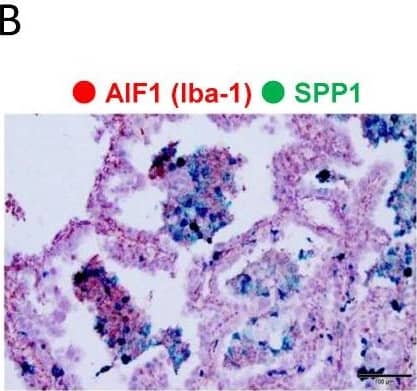
Detection of Osteopontin/OPN by Immunohistochemistry Evaluation of SPP1 expression on cancer cells and macrophages. (A,B). Representative dual ISH (green: SPP1; red: Iba-1) in adenocarcinoma. (C). Representative single-IHC of SPP1 in adenocarcinoma and SCC. (D). Double-IHC of SPP1 and Iba-1 to examine the SPP1 expression level in cancer cells (Iba-1-negative). Double-IHC of SPP1 and PU.1 to examine the SPP1 expression level on TAMs (PU.1-positive in the nucleus). (E). SPP1’s expression level was scored according to the proportion of stained cells as follows: less than 1% staining, score 0; 1% to 49% staining, score 1; more than 50% staining, score 2. The proportions of samples with each score among cancer cells and TAMs in adenocarcinoma and SCC are shown in the pie charts. Image collected and cropped by CiteAb from the following open publication (https://www.mdpi.com/2072-6694/14/18/4374), licensed under a CC-BY license. Not internally tested by R&D Systems.
 View Larger
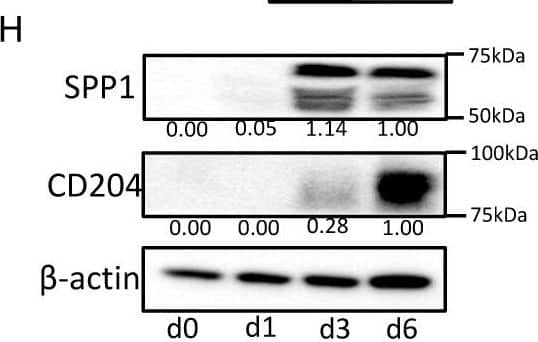
Detection of Osteopontin/OPN by Western Blot SPP1 expression in macrophages. (A) SPP1 expression in macrophages, THP-1 cells, U937 cells, and 10 lung cancer cell lines was examined by qRT-PCR. (B) Macrophages (blue) and THP-1 cells (green) were stimulated with the CM of cancer cell lines; then, the SPP1 mRNA expression level was evaluated. Control (CT) refers to macrophages or THP-1 without CM of cancer cell lines added. (C) Monocytes were cultured with M-CSF and GM-CSF as described in the Materials and Methods section, and SPP1 mRNA and CD204 mRNA levels were evaluated at different stages of monocyte/macrophage culture (days 0, 3, and 5). (D) Monocytes were cultured with M-CSF or GM-CSF for 5 days, and SPP1 and CD204 expression levels were examined. (E) SPP1′s concentration (ng/mL) in the CM of macrophages cultured with M-CSF or GM-CSF was examined by ELISA at days 1 to 3 (n = 3). (F) Immunocytostaining of SPP1 in the macrophages cultured with M-CSF or GM-CSF at days 0 and 5. (G) SPP1 and CD204 expression levels in THP-1 cells differentiated for 0, 1, 3, or 6 days were examined by qRT-PCR (G) and Western blot analysis (H). *: statistically significant, p value < 0.05. Image collected and cropped by CiteAb from the following open publication (https://www.mdpi.com/2072-6694/14/18/4374), licensed under a CC-BY license. Not internally tested by R&D Systems.
Reconstitution Calculator
Preparation and Storage
- 12 months from date of receipt, -20 to -70 °C as supplied.
- 1 month, 2 to 8 °C under sterile conditions after reconstitution.
- 6 months, -20 to -70 °C under sterile conditions after reconstitution.
Background: Osteopontin/OPN
Osteopontin (OPN, previously also referred to as transformation-associated secreted phosphoprotein, bone sialoprotein I, 2ar, 2B7, early T lymphocyte activation 1 protein, minopotin, calcium oxalate crystal growth inhibitor protein), is a secreted, highly acidic, calcium-binding, RGD-containing, phosphorylated glycoprotein originally isolated from bone matrix (1). Subsequently, OPN has been found in kidney, placenta, blood vessels and various tumor tissues. Many cell types (including macrophages, osteoclasts, activated T cells, fibroblasts, epithelial cells, vascular smooth muscle cells, and natural killer cells) can express OPN in response to activation by cytokines, growth factors or inflammatory mediators. Elevated expression of OPN has also been associated with numerous pathobiological conditions such as atherosclerotic plaques, renal tubulointerstitial fibrosis, granuloma formations in tuberculosis and silicosis, neointimal formation associated with balloon catheterization, metastasizing tumors, and cerebral ischemia. Human OPN cDNA encodes a 314 amino acid (aa) residue precursor protein with a 16 aa residue predicted signal peptide that is cleaved to yield a 298 aa residue mature protein with an integrin binding sequence (RGD), and N- and O-glycosylation sites. By alternative splicing, at least three human OPN isoforms exist. OPN has been shown to bind to different cell types through RGD-mediated interaction with the integrins alpha v beta 1, alpha v beta 3, alpha v beta 5, and non-RGD-mediated interaction with CD44 and the integrins alpha 8 beta 1 or alpha 9 beta 1. OPN exists both as a component of extracellular matrix and as a soluble molecule. Functionally, OPN is chemotactic for macrophages, smooth muscle cells, endothelial cells and glial cells. OPN has also been shown to inhibit nitric oxide production and cytotoxicity by activated macrophages. Human, mouse, rat, pig, and bovine OPN share from approximately 40-80% amino acid sequence identity. Osteopontin is a substrate for proteolytic cleavage by thrombin, enterokinase, MMP-3, and MMP-7. The functions of OPN in a variety of cell types were shown to be modified as a result of proteolytic cleavage (2, 3).
- Ann. N.Y. Acad. Sci. (1995) 760, Apr. 21.
- Senger, D.R. et al. (1996) Biochim. Biophys. Acta. 1314:13.
- Agnihotri, R. et al. (2001) J. Biol. Chem. 276:28261.
Product Datasheets
Citations for Human Osteopontin/OPN Antibody
R&D Systems personnel manually curate a database that contains references using R&D Systems products. The data collected includes not only links to publications in PubMed, but also provides information about sample types, species, and experimental conditions.
49
Citations: Showing 1 - 10
Filter your results:
Filter by:
-
A pro-tumorigenic secretory pathway activated by p53 deficiency in lung adenocarcinoma
Authors: Tan X, Shi L, Banerjee P et al.
J. Clin. Invest.
-
Loss of MMP-2 in murine osteoblasts upregulates osteopontin and bone sialoprotein expression in a circuit regulating bone homeostasis
Authors: Rebecca A. Mosig, John A. Martignetti
Disease Models & Mechanisms
-
The 10q26 Risk Haplotype of Age-Related Macular Degeneration Aggravates Subretinal Inflammation by Impairing Monocyte Elimination
Authors: Fanny Beguier, Michael Housset, Christophe Roubeix, Sebastien Augustin, Yvrick Zagar, Caroline Nous et al.
Immunity
-
WDR5-H3K4me3 epigenetic axis regulates OPN expression to compensate PD-L1 function to promote pancreatic cancer immune escape
Authors: Chunwan Lu, Zhuoqi Liu, John D Klement, Dafeng Yang, Alyssa D Merting, Dakota Poschel et al.
Journal for ImmunoTherapy of Cancer
-
Predictive Biomarkers and Patient Outcome in Platinum-Resistant (PLD-Treated) Ovarian Cancer
Authors: Isabel J. Dionísio de Sousa, Durval S. Marques, Catarina Príncipe, Raquel V. Portugal, Sule Canberk, Hugo Prazeres et al.
Diagnostics (Basel)
-
Elevating Growth Factor Responsiveness and Axon Regeneration by Modulating Presynaptic Inputs
Authors: Yiling Zhang, Philip R. Williams, Anne Jacobi, Chen Wang, Anurag Goel, Arlene A. Hirano et al.
Neuron
-
The CCL2-CCR2 astrocyte-cancer cell axis in tumor extravasation at the brain
Authors: Cynthia Hajal, Yoojin Shin, Leanne Li, Jean Carlos Serrano, Tyler Jacks, Roger D. Kamm
Science Advances
-
Assessing the Feasibility of Neutralizing Osteopontin with Various Therapeutic Antibody Modalities
Authors: Vahid Farrokhi, Jeffrey R. Chabot, Hendrik Neubert, Zhiyong Yang
Scientific Reports
-
Cancer‐associated fibroblast‐derived secreted phosphoprotein 1 contributes to resistance of hepatocellular carcinoma to sorafenib and lenvatinib
Authors: Jung Woo Eun, Jung Hwan Yoon, Hye Ri Ahn, Seokhwi Kim, Young Bae Kim, Su Bin Lim et al.
Cancer Communications
-
Gene expression profiling in bladder cancer identifies potential therapeutic targets
Authors: Syed A. Hussain, Daniel H. Palmer, Wing-Kin Syn, Joseph J. Sacco, Richard M.D. Greensmith, Taha Elmetwali et al.
International Journal of Oncology
-
Identification of phenotypically, functionally, and anatomically distinct stromal niche populations in human bone marrow based on single-cell RNA sequencing
Authors: Li H, Bräunig S, Dhapolar P et al.
eLife
-
In vivo survival and differentiation of Friedreich ataxia iPSC-derived sensory neurons transplanted in the adult dorsal root ganglia
Authors: Viventi S, Frausin S, Howden SE et al.
Stem cells translational medicine
-
Overcoming myeloid-driven resistance to CAR T therapy by targeting SPP1
Authors: Gholamin, S;Natri, HM;Zhao, Y;Xu, S;Aftabizadeh, M;Comin-Anduix, B;Saravanakumar, S;Masia, C;Wong, RA;Peter, L;Chung, MI;Mee, ED;Aguilar, B;Starr, R;Torrejon, DY;Alizadeh, D;Wu, X;Kalbasi, A;Ribas, A;Forman, S;Badie, B;Banovich, NE;Brown, CE;
bioRxiv : the preprint server for biology
Species: Mouse
Sample Types: Whole Tissue
Applications: Immunohistochemistry -
Spatial distribution and functional integration of displaced retinal ganglion cells
Authors: Duda, S;Block, CT;Pradhan, DR;Arzhangnia, Y;Klaiber, A;Greschner, M;Puller, C;
Scientific reports
Species: Mouse
Sample Types: Whole Tissue
Applications: Immunohistochemistry -
Signalling by senescent melanocytes hyperactivates hair growth
Authors: Wang, X;Ramos, R;Phan, AQ;Yamaga, K;Flesher, JL;Jiang, S;Oh, JW;Jin, S;Jahid, S;Kuan, CH;Nguyen, TK;Liang, HY;Shettigar, NU;Hou, R;Tran, KH;Nguyen, A;Vu, KN;Phung, JL;Ingal, JP;Levitt, KM;Cao, X;Liu, Y;Deng, Z;Taguchi, N;Scarfone, VM;Wang, G;Paolilli, KN;Wang, X;Guerrero-Juarez, CF;Davis, RT;Greenberg, EN;Ruiz-Vega, R;Vasudeva, P;Murad, R;Widyastuti, LHP;Lee, HL;McElwee, KJ;Gadeau, AP;Lawson, DA;Andersen, B;Mortazavi, A;Yu, Z;Nie, Q;Kunisada, T;Karin, M;Tuckermann, J;Esko, JD;Ganesan, AK;Li, J;Plikus, MV;
Nature
Species: Human
Sample Types: Whole Tissue
Applications: Immunohistochemistry -
Glioblastoma induces the recruitment and differentiation of hybrid neutrophils from skull bone marrow
Authors: BM Lad, AS Beniwal, S Jain, P Shukla, J Jung, SS Shah, G Yagnik, H Babikir, AT Nguyen, S Gill, JS Young, A Lui, D Salha, A Diaz, MK Aghi
bioRxiv : the preprint server for biology, 2023-03-25;0(0):.
Species: Human
Sample Types: Whole Cells
Applications: Neutralization -
Human early-onset dementia caused by DAP12 deficiency reveals a unique signature of dysregulated microglia
Authors: Y Zhou, M Tada, Z Cai, PS Andhey, A Swain, KR Miller, S Gilfillan, MN Artyomov, M Takao, A Kakita, M Colonna
Nature Immunology, 2023-01-19;0(0):.
Species: Mouse
Sample Types: Whole Tissue
Applications: IHC -
SPP1 Derived from Macrophages Is Associated with a Worse Clinical Course and Chemo-Resistance in Lung Adenocarcinoma
Authors: E Matsubara, Y Komohara, S Esumi, Y Shinchi, S Ishizuka, R Mito, C Pan, H Yano, D Kobayashi, Y Fujiwara, K Ikeda, T Sakagami, M Suzuki
Cancers, 2022-09-08;14(18):.
Species: Human
Sample Types: Cell Lysates, Whole Tissue
Applications: IHC, Western Blot -
Insights into homeobox B9: a propeller for metastasis in dormant prostate cancer progenitor cells
Authors: Y Sui, W Hu, W Zhang, D Li, H Zhu, Q You, R Zhu, Q Yi, T Tang, L Gao, S Zhu, T Yang
British Journal of Cancer, 2021-07-10;0(0):.
Species: Xenograft
Sample Types: Whole Cells
Applications: Western Blot -
Enhanced Osteogenic Differentiation of Periodontal Ligament Stem Cells Using a Graphene Oxide-Coated Poly(&epsilon-caprolactone) Scaffold
Authors: J Park, S Park, JE Kim, KJ Jang, H Seonwoo, JH Chung
Polymers, 2021-03-05;13(5):.
Species: Human
Sample Types: Whole Cells
Applications: ICC -
The interaction between cancer associated fibroblasts and tumor associated macrophages via the osteopontin pathway in the tumor microenvironment of hepatocellular carcinoma
Authors: K Tokuda, Y Morine, K Miyazaki, S Yamada, Y Saito, M Nishi, T Tokunaga, T Ikemoto, S Imura, M Shimada
Oncotarget, 2021-02-16;12(4):333-343.
Species: Human
Sample Types: Whole Cells
Applications: Neutralization -
Aligned Nanofiber-Guided Bone Regeneration Barrier Incorporated with Equine Bone-Derived Hydroxyapatite for Alveolar Bone Regeneration
Authors: JW Lim, KJ Jang, H Son, S Park, JE Kim, HB Kim
Polymers, 2020-12-25;0(0):.
Species: Human
Sample Types: Whole Cells
Applications: ICC -
Extreme Diversity of the Human Vascular Mesenchymal Cell Landscape
Authors: LE Bruijn, BEWM van den Ak, CM van Rhijn, JF Hamming, JHN Lindeman
J Am Heart Assoc, 2020-11-16;9(23):e017094.
Species: Human
Sample Types: Whole Tissue
Applications: IHC -
Effect of Calcium Chloride Hydrothermal Treatment of Titanium on Protein, Cellular, and Bacterial Adhesion Properties
Authors: T Haraguchi, Y Ayukawa, Y Shibata, T Takeshita, I Atsuta, Y Ogino, N Yasunami, Y Yamashita, K Koyano
J Clin Med, 2020-08-13;9(8):.
Species: Human, N/A
Sample Types: Protein, Substrate
Applications: ELISA Capture, Protein Adsorption -
Co-culture of human fibroblasts, smooth muscle and endothelial cells promotes osteopontin induction in hypoxia
Authors: N Sadaghianl, J Contenti, M Dufies, J Parola, M Rouleau, S Lee, JF Peyron, L Fabbri, R Hassen-Kho, J Pouysségur, F Bost, E Jean-Bapti, A Dardik, NM Mazure
J. Cell. Mol. Med., 2020-02-07;0(0):.
Species: Human
Sample Types: Cell Culture Lysates
Applications: Western Blot -
Mineral deposition and vascular invasion of hydroxyapatite reinforced collagen scaffolds seeded with human adipose-derived stem cells
Authors: HE Weiss-Bilk, MJ Meagher, JA Gargac, GL Niebur, RK Roeder, DR Wagner
Biomater Res, 2019-10-17;23(0):15.
Species: Human
Sample Types: Whole Cells
Applications: Flourescense Microscopy -
Differential expression patterns of Toll Like Receptors and Interleukin-37 between calcific aortic and mitral valve cusps in humans
Authors: A Kapelouzou, C Kontogiann, DI Tsilimigra, G Georgiopou, L Kaklamanis, L Tsourelis, DV Cokkinos
Cytokine, 2019-02-01;116(0):150-160.
Species: Human
Sample Types: Whole Tissue
Applications: IHC -
Osteopontin mediates glioblastoma-associated macrophage infiltration and is a therapeutic target
Authors: J Wei, A Marisetty, B Schrand, K Gabrusiewi, Y Hashimoto, M Ott, Z Grami, LY Kong, X Ling, HG Caruso, S Zhou, YA Wang, GN Fuller, JT Huse, E Gilboa, N Kang, X Huang, R Verhaak, S Li, AB Heimberger
J. Clin. Invest., 2018-11-19;0(0):.
Species: Human
Sample Types: Whole Cells
Applications: Neutralization -
Single-Cell RNA-Seq Reveals the Transcriptional Landscape and Heterogeneity of Aortic Macrophages in Murine Atherosclerosis
Authors: C Cochain, E Vafadarnej, P Arampatzi, P Jaroslav, H Winkels, K Ley, D Wolf, AE Saliba, A Zernecke
Circ. Res., 2018-03-15;0(0):.
Species: Human
Sample Types: Whole Tissue
Applications: IHC-P -
Osteopontin contributes to effective neutrophils recruitment, IL-1? production, and apoptosis in Aspergillus fumigatus keratitis
Authors: G Zhao, M Hu, C Li, J Lee, K Yuan, G Zhu, C Che
Immunol. Cell Biol., 2018-02-26;0(0):.
Species: Human
Sample Types: Whole Cells
Applications: Neutralization -
Phenotypic and Functional Characterization of Peripheral Sensory Neurons derived from Human Embryonic Stem Cells
Authors: AJ Alshawaf, S Viventi, W Qiu, G D'Abaco, B Nayagam, M Erlichster, G Chana, I Everall, J Ivanusic, E Skafidas, M Dottori
Sci Rep, 2018-01-12;8(1):603.
Species: Human
Sample Types: Whole Cells
Applications: ICC -
Generation of iPSC-derived limb progenitor-like cells for stimulating phalange regeneration in the adult mouse
Authors: Y Chen, H Xu, G Lin
Cell Discov, 2017-12-19;3(0):17046.
Species: Mouse
Sample Types: Whole Tissue
Applications: IHC -
Gene expression profiling in bladder cancer identifies potential therapeutic targets
Authors: Syed A. Hussain, Daniel H. Palmer, Wing-Kin Syn, Joseph J. Sacco, Richard M.D. Greensmith, Taha Elmetwali et al.
International Journal of Oncology
Species: Human
Sample Types: Cell Lysates
Applications: Western Blot -
Osteopontin - Metallothionen I/II Interactions In Experimental Autoimmunune Encephalomyelitis
Authors: H Jakovac, TG Kezele, S Šu?urovi?, B Mulac-Jeri, B Radoševi?-
Neuroscience, 2017-03-24;0(0):.
Species: Rat
Sample Types: Tissue Homogenates
Applications: Western Blot -
Inhibition of Cellular Adhesion by Immunological Targeting of Osteopontin Neoepitopes Generated through Matrix Metalloproteinase and Thrombin Cleavage.
Authors: Jurets A, Le Bras M, Staffler G, Stein G, Leitner L, Neuhofer A, Tardelli M, Turkof E, Zeyda M, Stulnig T
PLoS ONE, 2016-02-03;11(2):e0148333.
Species: Human
Sample Types: Cell Lysates
Applications: Western Blot -
Osteopontin depletion decreases inflammation and gastric epithelial proliferation during Helicobacter pylori infection in mice.
Authors: Park J, Lee S, Go D, Kim H, Kwon H, Kim D
Lab Invest, 2015-04-13;95(6):660-71.
Applications: Western Blot -
Cell stress induces upregulation of osteopontin via the ERK pathway in type II alveolar epithelial cells.
Authors: Kato, Aki, Okura, Takafumi, Hamada, Chizuru, Miyoshi, Seigo, Katayama, Hitoshi, Higaki, Jitsuo, Ito, Ryoji
PLoS ONE, 2014-06-25;9(6):e100106.
Species: Human
Sample Types: Whole Cells
Applications: Neutralization -
CD44v6 is a marker of constitutive and reprogrammed cancer stem cells driving colon cancer metastasis.
Authors: Todaro M, Gaggianesi M, Catalano V, Benfante A, Iovino F, Biffoni M, Apuzzo T, Sperduti I, Volpe S, Cocorullo G, Gulotta G, Dieli F, De Maria R, Stassi G
Cell Stem Cell, 2014-03-06;14(3):342-56.
Species: Human
Sample Types: Whole Cells
Applications: Functional Assay -
Osteopontin promotes the invasive growth of melanoma cells by activating integrin alphavbeta3 and down-regulating tetraspanin CD9.
Authors: Yin M, Soikkeli J, Jahkola T, Virolainen S, Saksela O, Holtta E
Am J Pathol, 2014-01-08;184(3):842-58.
Species: Human
Sample Types: Whole Cells
Applications: Neutralization -
Mechanism of hepatitis C virus (HCV)-induced osteopontin and its role in epithelial to mesenchymal transition of hepatocytes.
Authors: Iqbal J, McRae S, Banaudha K, Mai T, Waris G
J Biol Chem, 2013-11-15;288(52):36994-7009.
Species: Human
Sample Types: Cell Lysates
Applications: Western Blot -
Regulation and function of immunosuppressive molecule human leukocyte antigen G5 in human bone tissue.
Authors: Deschaseaux F, Gaillard J, Langonne A, Chauveau C, Naji A, Bouacida A, Rosset P, Heymann D, De Pinieux G, Rouas-Freiss N, Sensebe L
FASEB J, 2013-04-16;27(8):2977-87.
Species: Human
Sample Types: Whole Cells
Applications: IHC -
Loss of MMP-2 in murine osteoblasts upregulates osteopontin and bone sialoprotein expression in a circuit regulating bone homeostasis
Authors: Rebecca A. Mosig, John A. Martignetti
Disease Models & Mechanisms
-
Osteopontin is a prognostic factor for survival of acute myeloid leukemia patients.
Authors: Liersch R, Gerss J, Schliemann C, Bayer M, Schwoppe C, Biermann C, Appelmann I, Kessler T, Lowenberg B, Buchner T, Hiddemann W, Muller-Tidow C, Berdel WE, Mesters R
Blood, 2012-04-17;119(22):5215-20.
Species: Human
Sample Types: Whole Tissue
Applications: IHC-P -
Secreted osteopontin is highly polymerized in human airways and fragmented in asthmatic airway secretions.
Authors: Arjomandi M, Frelinger J, Donde A
PLoS ONE, 2011-10-21;6(10):e25678.
Species: Human
Sample Types: Recombinant Protein
Applications: Western Blot -
The crucial role of cyclooxygenase-2 in osteopontin-induced protein kinase C alpha/c-Src/IkappaB kinase alpha/beta-dependent prostate tumor progression and angiogenesis.
Authors: Jain S, Chakraborty G, Kundu GC
Cancer Res., 2006-07-01;66(13):6638-48.
Species: Human
Sample Types: Cell Lysates
Applications: Western Blot -
Angiogenesis regulators S100A4, SPARC and SPP1 correlate with macrophage infiltration and are prognostic biomarkers in colon and rectal cancers
Authors: Kazakova E, Rakina M, Sudarskikh T et al.
Frontiers in oncology
-
Osteopontin Links Myeloid Activation and Disease Progression in Systemic Sclerosis
Authors: Xia Gao, Guiquan Jia, Anna Guttman, Daryle J. DePianto, Katrina B. Morshead, Kai-Hui Sun et al.
Cell Reports Medicine
-
Interleukin 2 Promotes Hepatic Regulatory T Cell Responses and Protects From Biliary Fibrosis in Murine Sclerosing Cholangitis
Authors: Amy E. Taylor, Alexandra N. Carey, Ramesh Kudira, Celine S. Lages, Tiffany Shi, Simon Lam et al.
Hepatology
-
Thrombin-activatable carboxypeptidase B cleavage of osteopontin regulates neutrophil survival and synoviocyte binding in rheumatoid arthritis.
Authors: Sharif SA, Du X, Myles T, Song JJ, Price E, Lee DM, Goodman SB, Nagashima M, Morser J, Robinson WH, Leung LL
Arthritis Rheum., 2009-10-01;60(10):2902-12.
FAQs
No product specific FAQs exist for this product, however you may
View all Antibody FAQsReviews for Human Osteopontin/OPN Antibody
There are currently no reviews for this product. Be the first to review Human Osteopontin/OPN Antibody and earn rewards!
Have you used Human Osteopontin/OPN Antibody?
Submit a review and receive an Amazon gift card.
$25/€18/£15/$25CAN/¥75 Yuan/¥2500 Yen for a review with an image
$10/€7/£6/$10 CAD/¥70 Yuan/¥1110 Yen for a review without an image

