Human/Mouse/Rat Activin A beta A subunit Antibody Summary
Applications
Human/Mouse/Rat Activin A Sandwich Immunoassay
Please Note: Optimal dilutions should be determined by each laboratory for each application. General Protocols are available in the Technical Information section on our website.
Scientific Data
 View Larger
Hemoglobin Expression Induced by Activin A and Neutralization by Human/ Mouse/Rat Activin A Antibody. Recombinant Human/Mouse/ Rat Activin A (Catalog # 338-AC) increases hemoglobin expression in the K562 human chronic myelogenous leukemia cell line in a dose-dependent manner (orange line), as measured by the psuedoperoxidase assay. Hemoglobin Expression elicited by Recombinant Human/Mouse/Rat Activin A (7.5 ng/mL) is neutralized (green line) by increasing concentrations of Goat Anti-Human/Mouse/Rat Activin A beta A subunit Monoclonal Antibody (Catalog # MAB3381). The ND50 is typically 0.02-0.06 µg/mL.
 View Larger
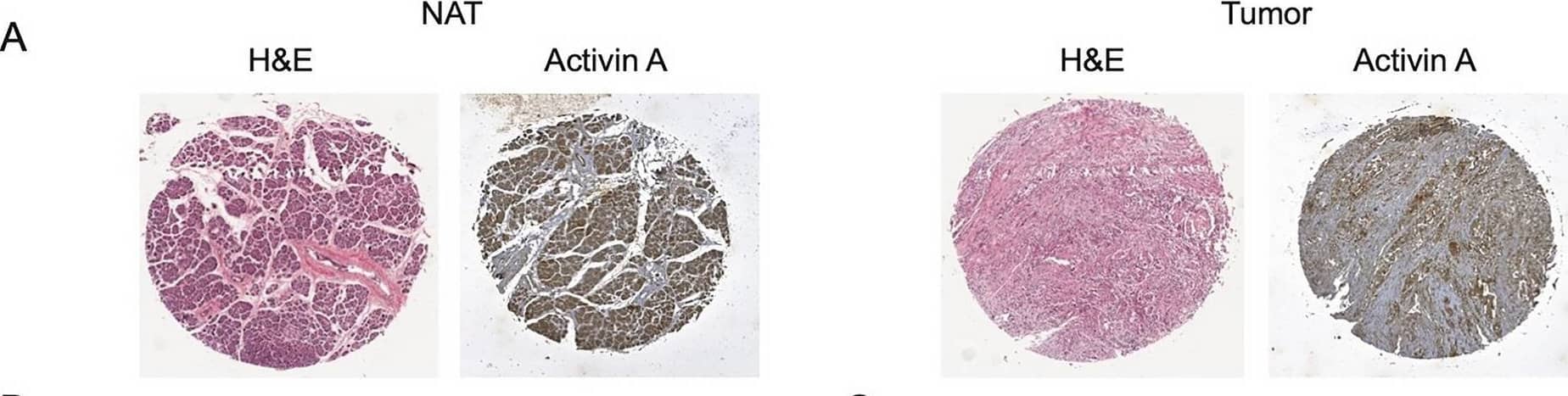
Detection of Activin A beta A subunit by Immunohistochemistry Activin A levels are significantly higher in tumor tissue and correlate to worse prognosis in PDAC. (A) Representative cores of pancreatic tumors from a human pancreatic tissue microarray stained with H&E to assess the percentage of epithelial versus stromal cells in each core. Adjacent sections were immunostained for activin A expression. (B) Quantification of the percentage of epithelial cells (left panel) or stromal cells (right panel) in normal tissue (white bar) versus tumor tissue (black bar). Statistical analysis is unpaired t-test. (C) Quantification of activin A in TMA (n = 63). An average of the percentage of epithelial and stromal fraction was calculated and scored in each TMA. Comparing epithelial (left panel) and stromal fraction (right panel) in normal tissue (white bar) versus tumor tissue (black bar). Statistical analysis 2-way ANOVA; mean ± SEM, ***(p < 0.001). (D) Kaplan–Meier plots of patient overall survival versus expression of activin A in either epithelial cells (left panel) or stromal cells (right panel). Statistical analysis Log-rank (Mantel-Cox) test, ** (p < 0.01), ***(p < 0.001). Image collected and cropped by CiteAb from the following open publication (https://pubmed.ncbi.nlm.nih.gov/33846512), licensed under a CC-BY license. Not internally tested by R&D Systems.
 View Larger
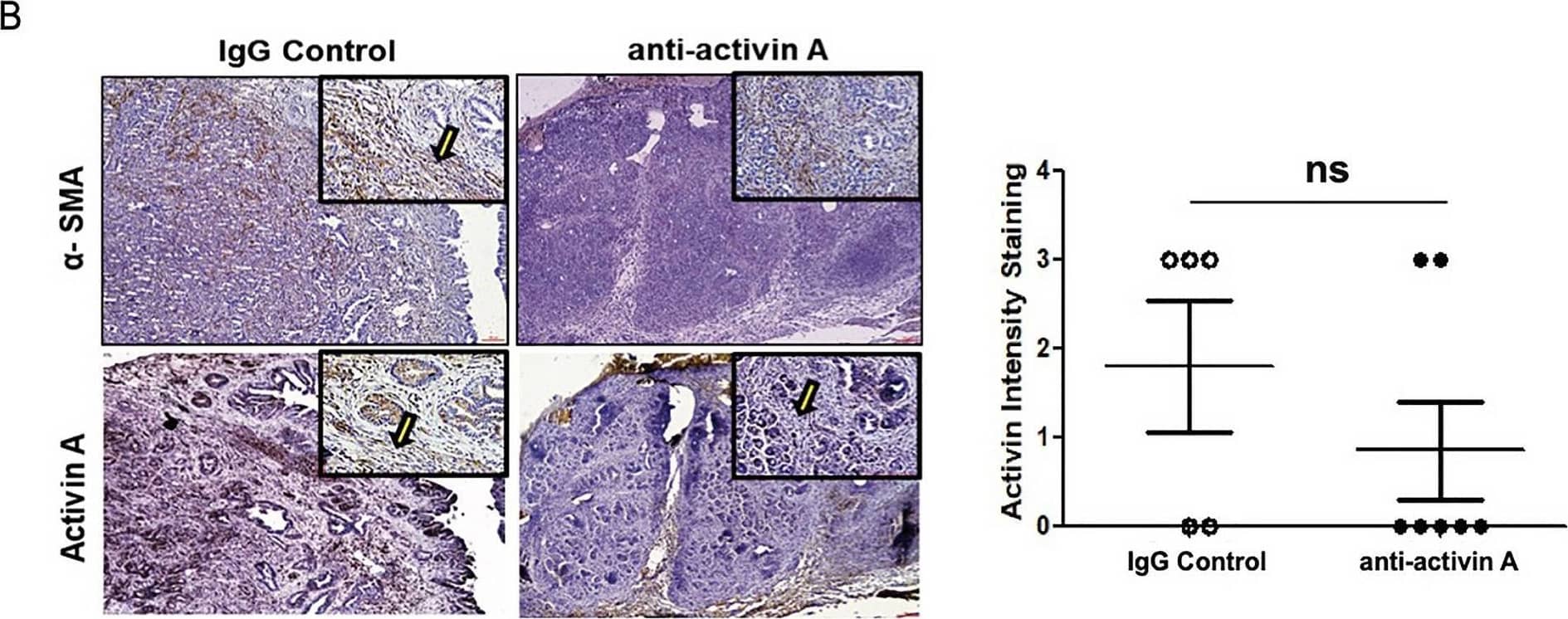
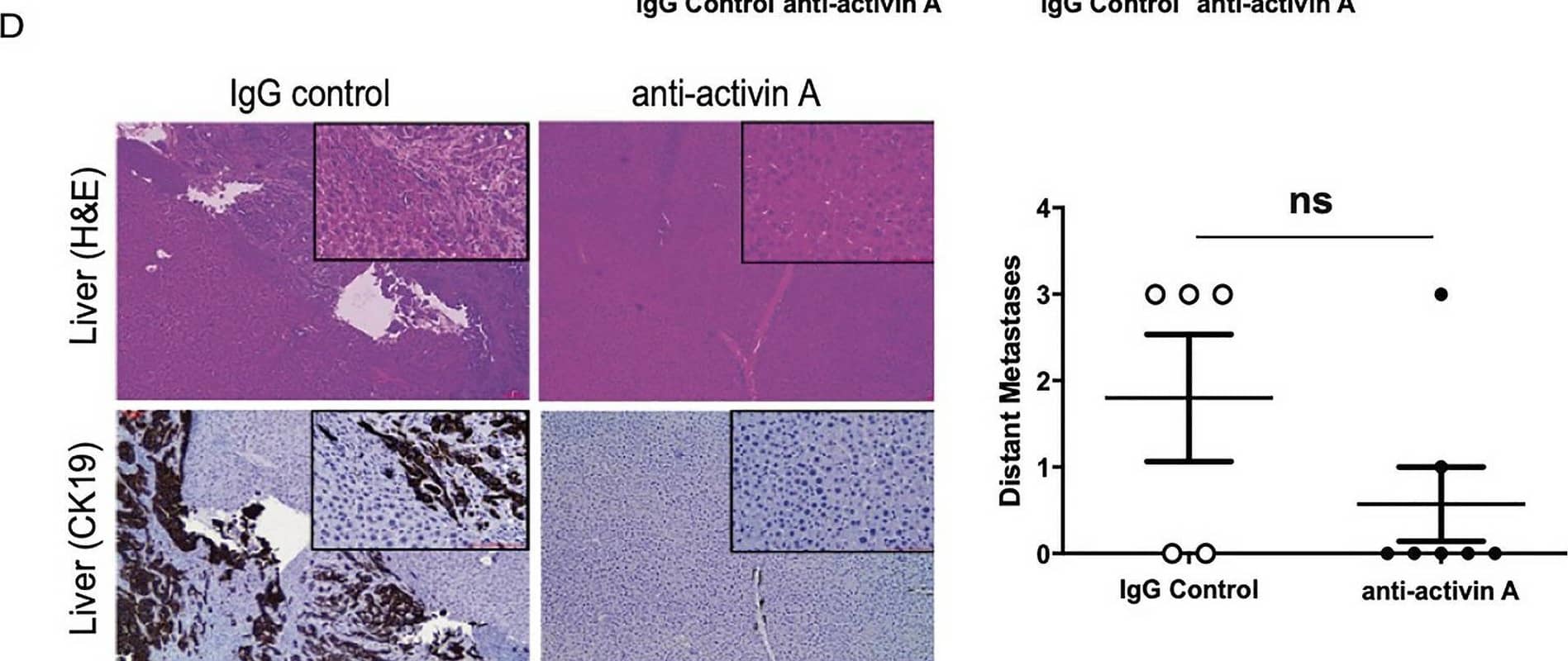
Detection of Activin A beta A subunit by Immunohistochemistry Inhibition of activin A in KPC mice significantly reduces metastasis. (A) Time course of anti-activin A neutralizing antibody injected in mice weekly (2 mg/kg). Control animals were injected with the same concentration of IgG isotype. Remaining animals were collected at the end of week 13 of treatment. (B) Representative image (×4 magnification) of H&E staining of pancreas from control treated (IgG) and anti-activin A treated KPC mice IHC-stained for either alpha -SMA (to indicate stromal cells) or activin A. Representative stromal cells marked by arrows. (C) Representative image (×4 magnification) of H&E staining of pancreas used for quantification of CN (yellow arrow) cystic lesions. Quantification of lesions is documented in both IgG control and anti-activin A antibody treated mice. (D) Left panel: Representative images (×10 and ×40 magnification) of liver tissue from control treated versus anti-activin A treated KPC mice stained with H&E (upper panel) or ductal marker protein CK19 (Lower panel). Right panel: Quantification of distant metastatic formation in the liver tissue of control (n = 5) and treated (n = 7) mice. Statistical analysis unpaired Student t-test (ns: not significant). Image collected and cropped by CiteAb from the following open publication (https://pubmed.ncbi.nlm.nih.gov/33846512), licensed under a CC-BY license. Not internally tested by R&D Systems.
 View Larger
Detection of Activin A beta A subunit by Immunohistochemistry Inhibition of activin A in KPC mice significantly reduces metastasis. (A) Time course of anti-activin A neutralizing antibody injected in mice weekly (2 mg/kg). Control animals were injected with the same concentration of IgG isotype. Remaining animals were collected at the end of week 13 of treatment. (B) Representative image (×4 magnification) of H&E staining of pancreas from control treated (IgG) and anti-activin A treated KPC mice IHC-stained for either alpha -SMA (to indicate stromal cells) or activin A. Representative stromal cells marked by arrows. (C) Representative image (×4 magnification) of H&E staining of pancreas used for quantification of CN (yellow arrow) cystic lesions. Quantification of lesions is documented in both IgG control and anti-activin A antibody treated mice. (D) Left panel: Representative images (×10 and ×40 magnification) of liver tissue from control treated versus anti-activin A treated KPC mice stained with H&E (upper panel) or ductal marker protein CK19 (Lower panel). Right panel: Quantification of distant metastatic formation in the liver tissue of control (n = 5) and treated (n = 7) mice. Statistical analysis unpaired Student t-test (ns: not significant). Image collected and cropped by CiteAb from the following open publication (https://pubmed.ncbi.nlm.nih.gov/33846512), licensed under a CC-BY license. Not internally tested by R&D Systems.
 View Larger
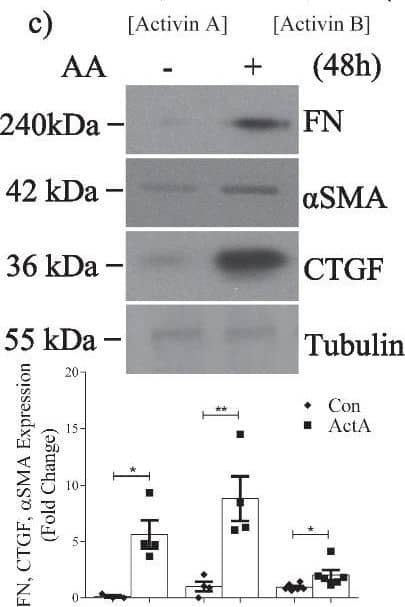
Detection of Activin A beta A subunit by Western Blot Specific activin A inhibition attenuates TGF beta 1-induced Smad3 activation and profibrotic responses in MC. a ELISA demonstrates that TGF beta 1 (24 h) increases actA and actB secretion (n = 3) to 19.5 ng/ml and 2.5 ng/ml, representing an 8.9- and 1.06-fold induction respectively. b TGF beta 1 increases actA in whole cell lysate by 1.8-fold (n = 3). c ActA (20 ng/ml) upregulates FN (n = 3–4), CTGF (n = 4) and alpha SMA (n = 6) at 48 h. d TGF beta 1 and actA both increase Smad3 transcriptional activity; no synergistic effect is seen (n = 6–12). e An actA neutralizing antibody attenuates TGF beta 1-induced FN (n = 5–6), alpha SMA (n = 5), CTGF (n = 5–6), and Smad3 activation (n = 10–12). f ActA neutralization decreases TGF beta 1-induced Smad3 transcriptional activity at 24 h (n = 9–15), but this is not decreased by actB neutralization (n = 6) (g). h MC were stimulated with TGF beta 1 or actA for 1 h, then treated with their type I receptor inhibitor SB431542 (50 µM). Restimulation with the same ligand shows that cells become refractory to TGF beta 1, but not actA (n = 4). *, **, ***, ****P < 0.05, 0.01, 0.001, 0.0001; one-way ANOVA with Tukey’s multiple comparisons post hoc test Image collected and cropped by CiteAb from the following open publication (https://pubmed.ncbi.nlm.nih.gov/36717814), licensed under a CC-BY license. Not internally tested by R&D Systems.
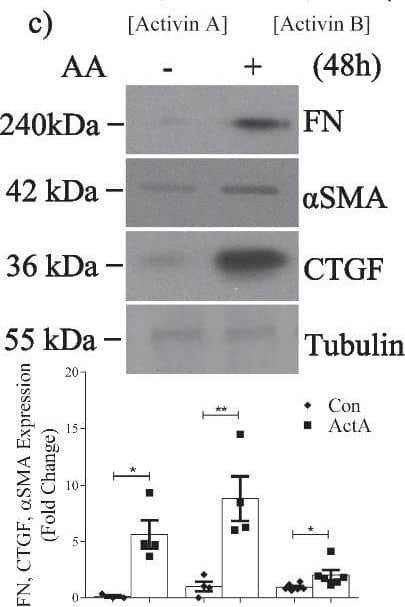 View Larger
Detection of Activin A beta A subunit by Western Blot Specific activin A inhibition attenuates TGF beta 1-induced Smad3 activation and profibrotic responses in MC. a ELISA demonstrates that TGF beta 1 (24 h) increases actA and actB secretion (n = 3) to 19.5 ng/ml and 2.5 ng/ml, representing an 8.9- and 1.06-fold induction respectively. b TGF beta 1 increases actA in whole cell lysate by 1.8-fold (n = 3). c ActA (20 ng/ml) upregulates FN (n = 3–4), CTGF (n = 4) and alpha SMA (n = 6) at 48 h. d TGF beta 1 and actA both increase Smad3 transcriptional activity; no synergistic effect is seen (n = 6–12). e An actA neutralizing antibody attenuates TGF beta 1-induced FN (n = 5–6), alpha SMA (n = 5), CTGF (n = 5–6), and Smad3 activation (n = 10–12). f ActA neutralization decreases TGF beta 1-induced Smad3 transcriptional activity at 24 h (n = 9–15), but this is not decreased by actB neutralization (n = 6) (g). h MC were stimulated with TGF beta 1 or actA for 1 h, then treated with their type I receptor inhibitor SB431542 (50 µM). Restimulation with the same ligand shows that cells become refractory to TGF beta 1, but not actA (n = 4). *, **, ***, ****P < 0.05, 0.01, 0.001, 0.0001; one-way ANOVA with Tukey’s multiple comparisons post hoc test Image collected and cropped by CiteAb from the following open publication (https://pubmed.ncbi.nlm.nih.gov/36717814), licensed under a CC-BY license. Not internally tested by R&D Systems.
 View Larger
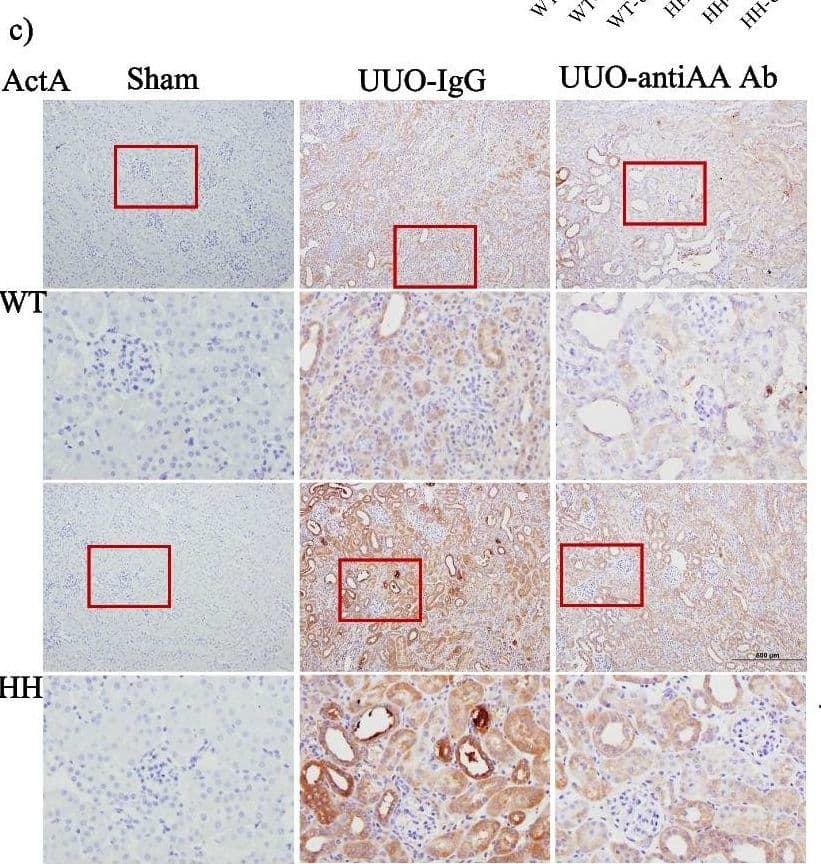
Detection of Activin A beta A subunit by Immunohistochemistry Activin A neutralization inhibits renal fibrosis in TGF beta 1-overexpressing mice. a TGF beta 1 transcript is increased in mice genetically engineered to overexpress TGF beta 1 (HH) compared with wild-type mice (WT) (n = 6–7, *p ≤ 0.05). b Serum actA is elevated in wild-type and HH mice after UUO. This is decreased by treatment with a neutralizing actA antibody (anti-actA) in HH mice. c Renal actA is increased after UUO, with a greater induction in HH mice. Both are attenuated by actA neutralization. Boxed areas are shown at higher magnification immediately below. ActA increases are seen particularly in tubular epithelial cells. d Renal alpha SMA, fibronectin (FN), pSmad3 and MRTF-A are increased after UUO and this is augmented in HH kidneys. Expression of all is attenuated by actA neutralization in both WT and HH kidneys. (n = 6–9) *, **, ***, ****P < 0.05, 0.01, 0.001, 0.0001; one-way ANOVA with Tukey’s multiple comparisons post hoc test where there are > 2 groups; t-test for 2 groups Image collected and cropped by CiteAb from the following open publication (https://pubmed.ncbi.nlm.nih.gov/36717814), licensed under a CC-BY license. Not internally tested by R&D Systems.
 View Larger
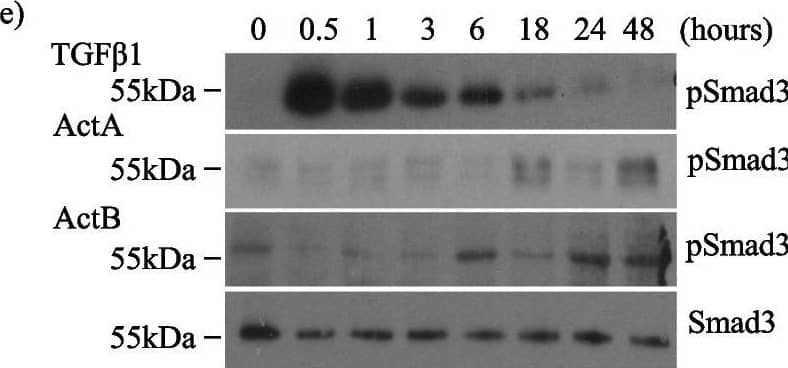
Detection of Activin A beta A subunit by Western Blot Activin inhibition attenuates TGF beta 1-induced fibrotic responses and Smad3 activation in MC. Activin inhibition with follistatin (FST) decreases TGF beta 1-induced: a FN, alpha SMA and CTGF upregulation at 48 h (n = 5), b Smad3 phosphorylation (pSmad3) at 24 h (n = 5), c Smad3 nuclear translocation as assessed using eGFP-Smad3 (n = 3; 25–30 cells quantified per treatment group) at 24 h, and d Smad3 transcriptional activity at 24 h (n = 8). e Time course experiments show increases in pSmad3 occur earlier (30–60 min) with TGF beta 1 (n = 4) compared with actA (n = 4) or actB (n = 3) (18–48 h). *, **, ***, ****P < 0.05, 0.01, 0.001, 0.0001; one-way ANOVA with Tukey’s multiple comparisons post hoc test Image collected and cropped by CiteAb from the following open publication (https://pubmed.ncbi.nlm.nih.gov/36717814), licensed under a CC-BY license. Not internally tested by R&D Systems.
 View Larger
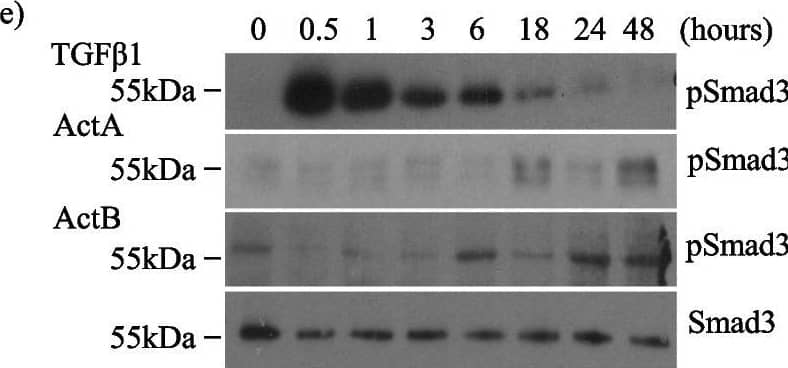
Detection of Activin A beta A subunit by Western Blot Activin inhibition attenuates TGF beta 1-induced fibrotic responses and Smad3 activation in MC. Activin inhibition with follistatin (FST) decreases TGF beta 1-induced: a FN, alpha SMA and CTGF upregulation at 48 h (n = 5), b Smad3 phosphorylation (pSmad3) at 24 h (n = 5), c Smad3 nuclear translocation as assessed using eGFP-Smad3 (n = 3; 25–30 cells quantified per treatment group) at 24 h, and d Smad3 transcriptional activity at 24 h (n = 8). e Time course experiments show increases in pSmad3 occur earlier (30–60 min) with TGF beta 1 (n = 4) compared with actA (n = 4) or actB (n = 3) (18–48 h). *, **, ***, ****P < 0.05, 0.01, 0.001, 0.0001; one-way ANOVA with Tukey’s multiple comparisons post hoc test Image collected and cropped by CiteAb from the following open publication (https://pubmed.ncbi.nlm.nih.gov/36717814), licensed under a CC-BY license. Not internally tested by R&D Systems.
 View Larger
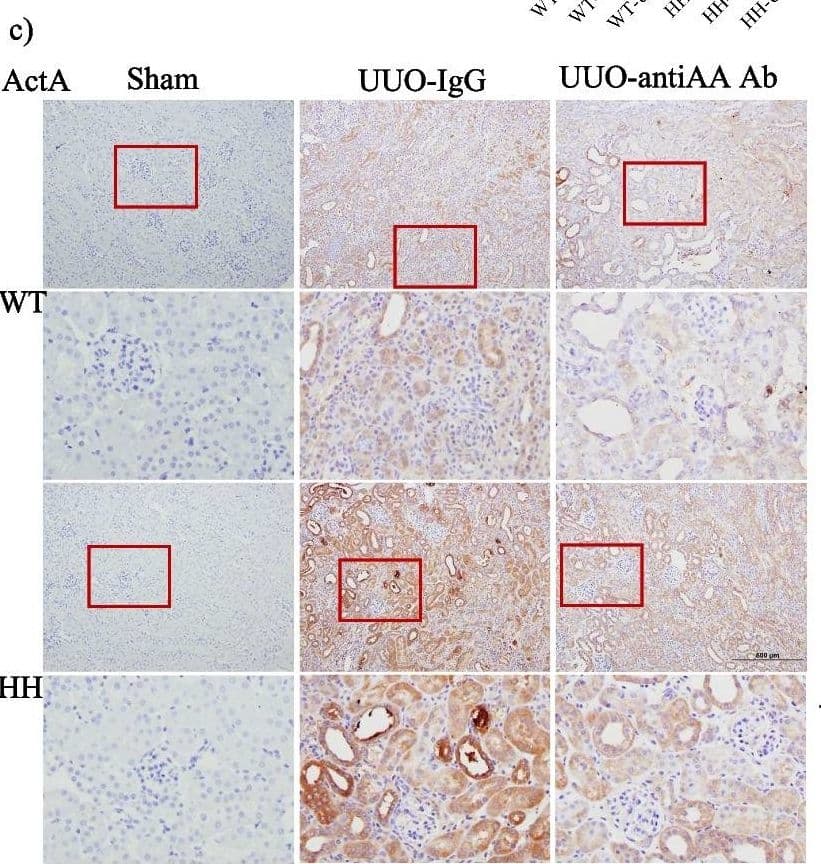
Detection of Activin A beta A subunit by Immunohistochemistry Activin A neutralization inhibits renal fibrosis in TGF beta 1-overexpressing mice. a TGF beta 1 transcript is increased in mice genetically engineered to overexpress TGF beta 1 (HH) compared with wild-type mice (WT) (n = 6–7, *p ≤ 0.05). b Serum actA is elevated in wild-type and HH mice after UUO. This is decreased by treatment with a neutralizing actA antibody (anti-actA) in HH mice. c Renal actA is increased after UUO, with a greater induction in HH mice. Both are attenuated by actA neutralization. Boxed areas are shown at higher magnification immediately below. ActA increases are seen particularly in tubular epithelial cells. d Renal alpha SMA, fibronectin (FN), pSmad3 and MRTF-A are increased after UUO and this is augmented in HH kidneys. Expression of all is attenuated by actA neutralization in both WT and HH kidneys. (n = 6–9) *, **, ***, ****P < 0.05, 0.01, 0.001, 0.0001; one-way ANOVA with Tukey’s multiple comparisons post hoc test where there are > 2 groups; t-test for 2 groups Image collected and cropped by CiteAb from the following open publication (https://pubmed.ncbi.nlm.nih.gov/36717814), licensed under a CC-BY license. Not internally tested by R&D Systems.
Reconstitution Calculator
Preparation and Storage
- 12 months from date of receipt, -20 to -70 °C as supplied.
- 1 month, 2 to 8 °C under sterile conditions after reconstitution.
- 6 months, -20 to -70 °C under sterile conditions after reconstitution.
Background: Activin A
Activin and Inhibin are members of the TGF-beta superfamily of cytokines and are involved in a wide range of biological processes including tissue morphogenesis and repair, fibrosis, inflammation, neural development, hematopoiesis, reproductive system function, and carcinogenesis (1‑7). Activin and Inhibin are produced as precursor proteins. Their amino terminal propeptides are proteolytically cleaved and facilitate formation of disulfide-linked dimers of the bioactive proteins (8, 9). Activins are nonglycosylated homodimers or heterodimers of various beta subunits ( beta A, beta B, beta C, and beta E in mammals), while Inhibins are heterodimers of a unique alpha subunit and one of the beta subunits. Activin A is a widely expressed homodimer of two beta A chains. The beta A subunit can also heterodimerize with a beta B or beta C subunit to form Activin AB and Activin AC, respectively (10). The 14 kDa mature human beta A chain shares 100% amino acid sequence identity with bovine, feline, mouse, porcine, and rat beta A. Activin A exerts its biological activities by binding to the type 2 serine/threonine kinase Activin RIIA which then noncovalently associates with the type 1 serine/threonine kinase Activin RIB/ALK-4 (7, 11). Signaling through this receptor complex leads to Smad activation and regulation of activin-responsive gene transcription (7, 11). The bioactivity of Activin A is regulated by a variety of mechanisms (11). BAMBI, Betaglycan, and Cripto are cell-associated molecules that function as decoy receptors or limit the ability of Activin A to induce receptor complex assembly (12‑14). The intracellular formation of Activin A can be prevented by the incorporation of the beta A subunit into Activin AC or Inhibin A (3, 10). And the bioavailability of Activin A is restricted by its incorporation into inactive complexes with alpha 2-Macroglobulin, Follistatin, and FLRG (15, 16).
- Kumanov, P. et al. (2005) Reprod. Biomed. Online 10:786.
- Maeshima, A. et al. (2008) Endocr. J. 55:1.
- Rodgarkia-Dara, C. et al. (2006) Mutat. Res. 613:123.
- Werner, S. and C. Alzheimer (2006) Cytokine Growth Factor Rev. 17:157.
- Xu, P. and A.K. Hall (2006) Dev. Biol. 299:303.
- Shav-Tal, Y. and D. Zipori (2002) Stem Cells 20:493.
- Chen, Y.G. et al. (2006) Exp. Biol. Med. 231:534.
- Gray, A.M. and A.J. Mason (1990) Science 247:1328.
- Mason, A.J. et al. (1996) Mol. Endocrinol. 10:1055.
- Thompson, T.B. et al. (2004) Mol. Cell. Endocrinol. 225:9.
- Harrison, C.A. et al. (2005) Trends Endocrinol. Metab. 16:73.
- Onichtchouk, D. et al. (1999) Nature 401:480.
- Gray, P.C. et al. (2002) Mol. Cell. Endocrinol. 188:254.
- Kelber, J.A. et al. (2008) J. Biol. Chem. 283:4490.
- Phillips, D.J. et al. (1997) J. Endocrinol. 155:65.
- Schneyer, A. et al. (2003) Endocrinology 144:1671.
Product Datasheets
Citations for Human/Mouse/Rat Activin A beta A subunit Antibody
R&D Systems personnel manually curate a database that contains references using R&D Systems products. The data collected includes not only links to publications in PubMed, but also provides information about sample types, species, and experimental conditions.
25
Citations: Showing 1 - 10
Filter your results:
Filter by:
-
Overexpression of CD36 in mammary fibroblasts suppresses colony growth in breast cancer cell lines
Authors: Qingsu Cheng, Kosar Jabbari, Garrett Winkelmaier, Cody Andersen, Paul Yaswen, Mina Khoshdeli et al.
Biochemical and Biophysical Research Communications
-
A high concentration of genistein down-regulates activin A, Smad3 and other TGF-beta pathway genes in human uterine leiomyoma cells
Authors: Xudong Di, Danica M.K. Andrews, Charles J. Tucker, Linda Yu, Alicia B. Moore, Xiaolin Zheng et al.
Experimental & Molecular Medicine
-
Activin A-Smad Signaling Mediates Connective Tissue Growth Factor Synthesis in Liver Progenitor Cells
Authors: Ze-Yang Ding, Guan-Nan Jin, Wei Wang, Yi-Min Sun, Wei-Xun Chen, Lin Chen et al.
International Journal of Molecular Sciences
-
Sox9 inhibits Activin A to promote biliary maturation and branching morphogenesis
Authors: Hrncir, HR;Goodloe, B;Bombin, S;Hogan, CB;Jadi, O;Gracz, AD;
Nature communications
Species: Mouse
Sample Types: In Vivo, Organoid
Applications: Immunohistochemistry, In vivo assay -
Sox9 links biliary maturation to branching morphogenesis
Authors: Hrncir, HR;Bombin, S;Goodloe, B;Hogan, CB;Jadi, O;Gracz, AD;
bioRxiv : the preprint server for biology
Applications: In Vivo, IHC -
GDF8 Contributes to Liver Fibrogenesis and Concomitant Skeletal Muscle Wasting
Authors: Culver, A;Hamang, M;Wang, Y;Jiang, H;Yanum, J;White, E;Gawrieh, S;Vuppalanchi, RK;Chalasani, NP;Dai, G;Yaden, BC;
Biomedicines
Species: Mouse
Sample Types:
Applications: In Vivo -
Orally-active, clinically-translatable senolytics restore alpha-Klotho in mice and humans
Authors: Y Zhu, LGPL Prata, EOW Gerdes, JME Netto, T Pirtskhala, N Giorgadze, U Tripathi, CL Inman, KO Johnson, A Xue, AK Palmer, T Chen, K Schaefer, JN Justice, AM Nambiar, N Musi, SB Kritchevsk, J Chen, S Khosla, D Jurk, MJ Schafer, T Tchkonia, JL Kirkland
EBioMedicine, 2022-03-13;0(0):103912.
Species: Human
Sample Types: Whole Cells
Applications: Neutralization -
Role of stromal activin A in human pancreatic cancer and metastasis in mice
Authors: G Mancinelli, C Torres, N Krett, J Bauer, K Castellano, R McKinney, D Dawson, G Guzman, R Hwang, S Grimaldo, P Grippo, B Jung
Scientific Reports, 2021-04-12;11(1):7986.
Species: Human
Sample Types: Whole Cells
Applications: ICC, Neutralization -
Activin A programs the differentiation of human TFH cells
Nat Immunol, 2016-07-04;17(8):976-84.
Species: Human
Sample Types: Whole Cells
Applications: Bioassay -
Activin A-Smad Signaling Mediates Connective Tissue Growth Factor Synthesis in Liver Progenitor Cells
Authors: Ze-Yang Ding, Guan-Nan Jin, Wei Wang, Yi-Min Sun, Wei-Xun Chen, Lin Chen et al.
International Journal of Molecular Sciences
Species: Human
Sample Types: Whole Tissue
Applications: Neutralization -
Low miR-143/miR-145 Cluster Levels Induce Activin A Overexpression in Oral Squamous Cell Carcinomas, Which Contributes to Poor Prognosis.
Authors: Bufalino A, Cervigne N, de Oliveira C, Fonseca F, Rodrigues P, Macedo C, Sobral L, Miguel M, Lopes M, Paes Leme A, Lambert D, Salo T, Kowalski L, Graner E, Coletta R
PLoS ONE, 2015-08-28;10(8):e0136599.
Species: Human
Sample Types: Cell Culture Supernates
Applications: ELISA Development -
Adipose Stromal Cell Contact with Endothelial Cells Results in Loss of Complementary Vasculogenic Activity Mediated by Induction of Activin A.
Authors: Merfeld-Clauss S, Lupov I, Lu H, March K, Traktuev D
Stem Cells, 2015-07-03;33(10):3039-51.
Species: Human
Sample Types: Cell Culture Supernates
Applications: Neutralization -
CCL2 shapes macrophage polarization by GM-CSF and M-CSF: identification of CCL2/CCR2-dependent gene expression profile.
Authors: Sierra-Filardi E, Nieto C, Dominguez-Soto A, Barroso R, Sanchez-Mateos P, Puig-Kroger A, Lopez-Bravo M, Joven J, Ardavin C, Rodriguez-Fernandez J, Sanchez-Torres C, Mellado M, Corbi A
J Immunol, 2014-03-17;192(8):3858-67.
Species: Human
Sample Types: Cell Culture Supernates
Applications: Blocking -
Activin A skews macrophage polarization by promoting a proinflammatory phenotype and inhibiting the acquisition of anti-inflammatory macrophage markers.
Authors: Sierra-Filardi E, Puig-Kroger A, Blanco FJ, Nieto C, Bragado R, Palomero MI, Bernabeu C, Vega MA, Corbi AL
Blood, 2011-03-09;117(19):5092-101.
Species: Human
Sample Types: Whole Cells
Applications: Neutralization -
Activin A is an anticatabolic autocrine cytokine in articular cartilage whose production is controlled by fibroblast growth factor 2 and NF-kappaB.
Authors: Alexander S, Watt F, Sawaji Y, Hermansson M, Saklatvala J
Arthritis Rheum., 2007-11-01;56(11):3715-25.
Species: Human, Porcine
Sample Types: Whole Cells
Applications: Neutralization -
The neuroprotective effect of Activin A and B: implication for neurodegenerative diseases.
Authors: Kupershmidt L, Amit T, Bar-Am O, Youdim MB, Blumenfeld Z
J. Neurochem., 2007-08-06;103(3):962-71.
Species: Human, Rat
Sample Types: Cell Lysates
Applications: Western Blot -
Fibroblast growth factor 2 modulates transforming growth factor beta signaling in mouse embryonic fibroblasts and human ESCs (hESCs) to support hESC self-renewal.
Authors: Greber B, Lehrach H, Adjaye J
Stem Cells, 2006-10-12;25(2):455-64.
Species: Mouse
Sample Types: Cell Culture Supernates
Applications: ELISA Development -
Requirement of Smad3 for mast cell growth.
Authors: Funaba M, Nakaya K, Ikeda T, Murakami M, Tsuchida K, Sugino H
Cell. Immunol., 2006-07-12;240(1):47-52.
Species: Mouse
Sample Types: Cell Lysates, Whole Cells
Applications: Neutralization, Western Blot -
N-cadherin is regulated by activin A and associated with tumor aggressiveness in esophageal carcinoma.
Authors: Utsunomiya T, Sonoda H, Mimori K
Clin. Cancer Res., 2004-09-01;10(17):5702-7.
Species: Human
Sample Types: Tissue Homogenates
Applications: Western Blot -
Autocrine activin A signalling in ovarian cancer cells regulates secretion of interleukin 6, autophagy, and cachexia
Authors: Kristine Pettersen, Sonja Andersen, Anna van der Veen, Unni Nonstad, Shinji Hatakeyama, Christian Lambert et al.
Journal of Cachexia, Sarcopenia and Muscle
-
Targeting senescent cells enhances adipogenesis and metabolic function in old age
Authors: Ming Xu, Allyson K Palmer, Husheng Ding, Megan M Weivoda, Tamar Pirtskhalava, Thomas A White et al.
eLife
-
Activin a promotes myofibroblast differentiation of endometrial mesenchymal stem cells via STAT3-dependent Smad/CTGF pathway
Authors: Zhenzhen Zhang, Jing Wang, Yabing Chen, Luxuan Suo, Huixian Chen, Li Zhu et al.
Cell Communication and Signaling
-
The role of activins in hepcidin regulation during malaria
Authors: N Spottiswoo, AE Armitage, AR Williams, AJ Fyfe, S Biswas, SH Hodgson, D Llewellyn, P Choudhary, SJ Draper, P Duffy, H Drakesmith
Infect. Immun., 2017-11-17;0(0):.
-
Activin B promotes the initiation and progression of liver fibrosis
Authors: Yan Wang, Matthew Hamang, Alexander Culver, Huaizhou Jiang, Jennifer Yanum, Veronica Garcia et al.
Hepatology Communications
-
The Activin A-Peroxisome Proliferator-Activated Receptor Gamma Axis Contributes to the Transcriptome of GM-CSF-Conditioned Human Macrophages
Authors: Concha Nieto, Rafael Bragado, Cristina Municio, Elena Sierra-Filardi, Bárbara Alonso, María M. Escribese et al.
Frontiers in Immunology
FAQs
No product specific FAQs exist for this product, however you may
View all Antibody FAQsReviews for Human/Mouse/Rat Activin A beta A subunit Antibody
Average Rating: 5 (Based on 2 Reviews)
Have you used Human/Mouse/Rat Activin A beta A subunit Antibody?
Submit a review and receive an Amazon gift card.
$25/€18/£15/$25CAN/¥75 Yuan/¥2500 Yen for a review with an image
$10/€7/£6/$10 CAD/¥70 Yuan/¥1110 Yen for a review without an image
Filter by:
We used this INHBA (100ng/mL) neutralizing antibody as part of an antibody cocktail containing several other antibodies to neutralize INHBA present in the Conditioned Medium (CM) from BT549 Cells treated with Angiotensin II. The effect of cytokines in the CM (+/-Neutralizing ab Cocktail) on Endothelial (HUVEC) Cell migration was measured using Incucyte Zoom Chemotaxis Assay.

I added a sulfo tag to this antibody and used it as a detection antibody when developing an immunoassay for Activin A.


