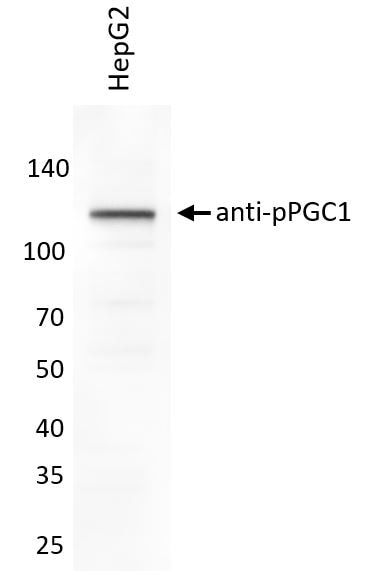
Human Phospho-PGC1 alpha (S571) Antibody Summary
Applications
Please Note: Optimal dilutions should be determined by each laboratory for each application. General Protocols are available in the Technical Information section on our website.
Scientific Data
 View Larger
Detection of Human Phospho-PGC1 alpha (S571) by Western Blot. Western blot shows lysates of HeLa human cervical epithelial carcinoma cell line and Jurkat human acute T cell leukemia cell line untreated (-) or treated (+) with 10 nm Recombinant Human IGF-I (Catalog # 291-G1) for 1 hour. PVDF Membrane was probed with 1 µg/mL of Rabbit Anti-Human Phospho-PGC1a (S571) Antigen Affinity-purified Polyclonal Antibody (Catalog # AF6650) followed by HRP-conjugated Anti-Rabbit IgG Secondary Antibody (Catalog # HAF008). A specific band was detected for Phospho-PGC1a (S571) at approximately 120 kDa (as indicated). This experiment was conducted under reducing conditions and using Immunoblot Buffer Group 1.
 View Larger
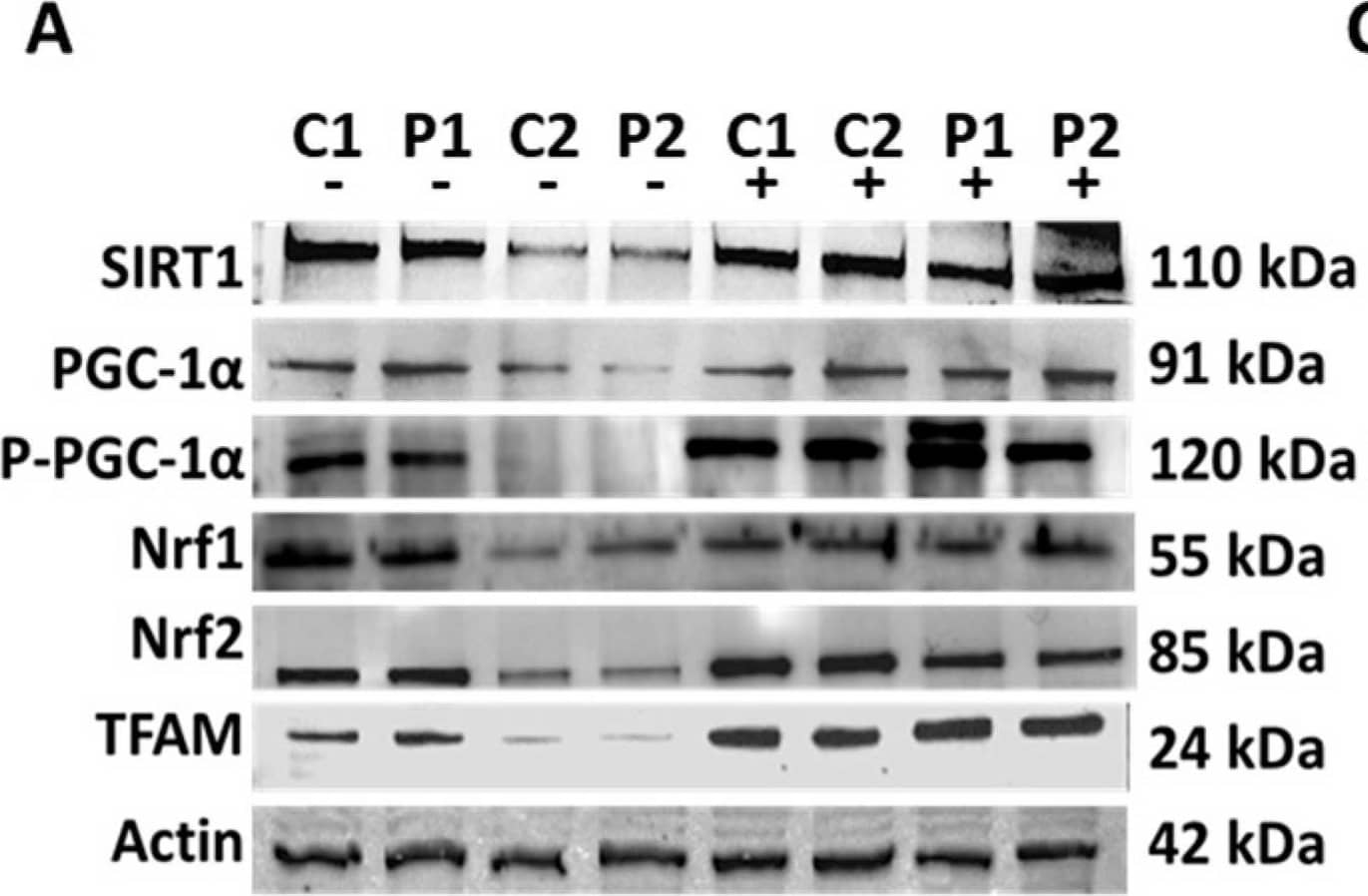
Detection of Phospho-PGC1 alpha (S571) by Western Blot Expression levels of mitochondrial biogenesis proteins in control and mutant cells with and without treatment. Polydatin and nicotinamide at 10 µM were used for seven days. (A) Immunoblotting analysis of mitochondrial biogenesis proteins in control (C1, C2) and mutant (P1, P2) cells. Actin was used as the loading control. (B) Band densitometry of Western blot data referred to actin and normalized to the mean of controls. (C) Immunoblotting analysis of mitochondrial biogenesis proteins in control (C1, C3) and mutant (P3) fibroblasts. Actin was used as the loading control. Original images can be found in Supplementary Materials. (D) Band densitometry of Western blot data referred to actin and normalized to the mean of controls. Data represent the mean ± SEM of three independent experiments. **** p < 0.0001 between control and GFM1 fibroblasts. ####p < 0.0001 between untreated and treated GFM1 cells. a.u.: arbitrary units. Image collected and cropped by CiteAb from the following open publication (https://pubmed.ncbi.nlm.nih.gov/38786005), licensed under a CC-BY license. Not internally tested by R&D Systems.
 View Larger
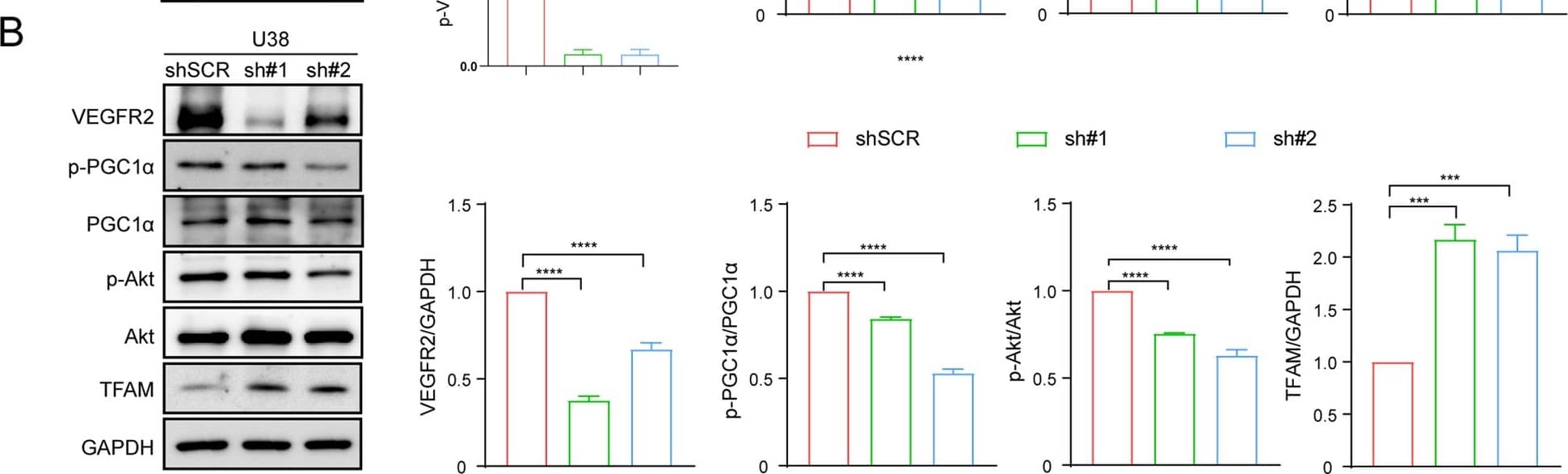
Detection of Phospho-PGC1 alpha (S571) by Western Blot VEGFR2 inhibition by Ki8751 interferes VEGF intracellular signaling in glioblastoma cells. A Western blot images showing the protein levels of p-VEGFR2, VEGFR2, p-PGC1 alpha, PGC1 alpha, p-AKT, AKT, TFAM of U38 cell in the absence or presence of Ki8751treatment for 48 h. The bar graphs plot the relative intensities of p-Akt and p-PGC1 alpha. Mean ± SEM, ***p < 0.001, ****p < 0.0001 as compared to vehicle treatment. B Western blot images of p-PGC1 alpha, PGC1 alpha, p-AKT, AKT, and TFAM immunoreactive bands of U38 cells with VEGFR2 knockdown by shRNAs. Mean ± SEM, ****p < 0.0001 as compared to the control shSCR. C Immunofluorescence images demonstrate the cellular location of PGC1 alpha staining in U38 and U87 cells without or with Ki8751 treatment for 48 h. DAPI was used as a nuclear location marker. Bar charts depict PGC1 alpha fluorescence intensities without or with Ki8751 treatment. Mean ± SEM, *p < 0.05 as compared to vehicle, n = 3. D Western blot images showing the protein level of PGC1 alpha in the cytosol and nucleus of U87 cells after treatment with Ki8751 or shRNA knockdown. LaminB1 and GAPDH were used as input control for nuclear protein or cytoplasmic protein, respectively. Bar graphs show the relative expression of nuclear PGC1 alpha in U87 cells. Mean ± SEM, ****p < 0.0001 as compared to the control. E Schematic illustration of VEGFR2 inhibition-induced mitochondrial biogenesis signaling and apoptosis in glioblastoma cells Image collected and cropped by CiteAb from the following open publication (https://pubmed.ncbi.nlm.nih.gov/38702818), licensed under a CC-BY license. Not internally tested by R&D Systems.
 View Larger
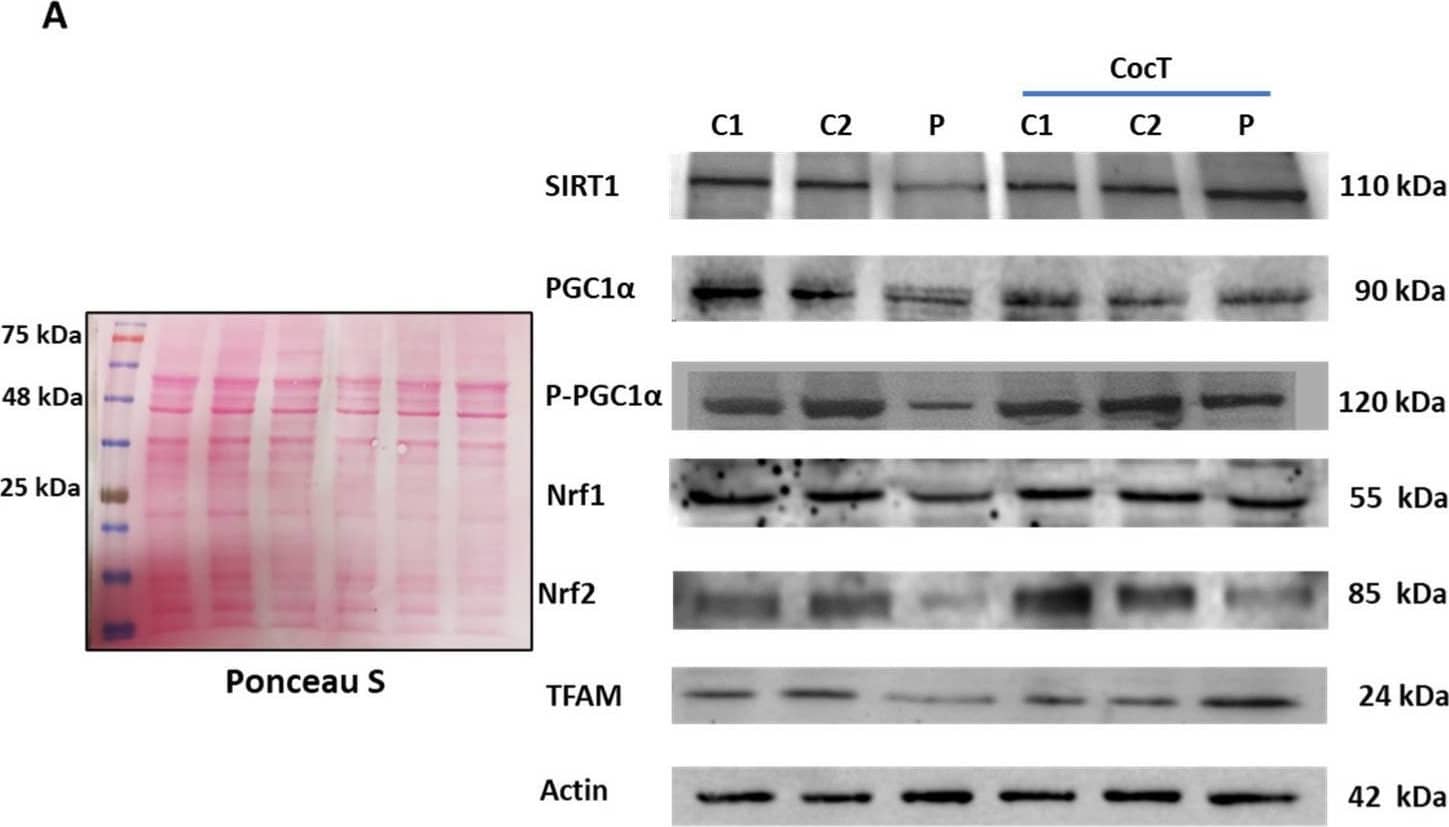
Detection of Phospho-PGC1 alpha (S571) by Western Blot The effect of CocT on the expression levels of mitochondrial biogenesis proteins in control (C1 and C2) and mutant (LIPT1) cells. Cells were treated with CocT for seven days. (A). The Western blot analysis of mitochondrial biogenesis proteins. Actin expression and Ponceau S staining were used to demonstrate equal protein loading. (B). Band densitometry of Western blot data referred to actin and was normalized to the mean of controls. Data represent the mean ± SD of 3 independent experiments. **** p < 0.0001 between control and mutant LIPT1 fibroblasts. # p < 0.05, ### p < 0.001, and #### p < 0.0001 between untreated and treated mutant LIPT1 fibroblasts. a.u.: arbitrary units. Image collected and cropped by CiteAb from the following open publication (https://pubmed.ncbi.nlm.nih.gov/39199267), licensed under a CC-BY license. Not internally tested by R&D Systems.
Reconstitution Calculator
Preparation and Storage
- 12 months from date of receipt, -20 to -70 °C as supplied.
- 1 month, 2 to 8 °C under sterile conditions after reconstitution.
- 6 months, -20 to -70 °C under sterile conditions after reconstitution.
Background: PGC1 alpha
PGC-1 alpha (PPAR-gamma coactivator 1; also LEM6) is a 97-120 kDa member of the PGC-1 family of proteins. It is expressed in select cell types, including brown adipocytes, skeletal muscle and hepatocytes. PGC-1 alpha participates in both RNA processing and transcriptional coactivation in conjunction with multiple nuclear hormone receptors such as PPAR gamma, RAR and TR. Human PCG-1 alpha is 798 amino acids (aa) in length. It contains an LxxLL nuclear receptor binding motif (aa 144-148), one PPAR-gamma interaction domain (aa 293-339), two NLSs and an RNA binding/processing region (aa 566-710). PGC-1 alpha activity is regulated by phosphorylation. AMPK is known to phosphorylate Thr178 and Ser539, promoting cotranscriptional activity. Conversely, Akt-mediated phosphorylation at Ser571 is reported to downregulate PGC-1 alpha activity. This latter effect is achieved by an initial Ser571 phosphorylation, followed by GCN5 binding and subsequent PCG-1 alpha acetylation that promotes PGC-1 alpha dissociation from target gene promoters.
Product Datasheets
Citations for Human Phospho-PGC1 alpha (S571) Antibody
R&D Systems personnel manually curate a database that contains references using R&D Systems products. The data collected includes not only links to publications in PubMed, but also provides information about sample types, species, and experimental conditions.
13
Citations: Showing 1 - 10
Filter your results:
Filter by:
-
Regulatory chromatin rewiring promotes metabolic switching during adaptation to oncogenic receptor tyrosine kinase inhibition
Authors: S Ogden, K Carys, I Ahmed, J Bruce, AD Sharrocks
Oncogene, 2022-09-24;0(0):.
-
Caloric restriction increases the resistance of aged heart to myocardial ischemia/reperfusion injury via modulating AMPK-SIRT1-PGC1a energy metabolism pathway
Authors: Guo Z, Wang M, Ying X et al.
Scientific reports
-
Inorganic nitrate and nitrite ameliorate kidney fibrosis by restoring lipid metabolism via dual regulation of AMP-activated protein kinase and the AKT-PGC1alpha pathway
Authors: X Li, Z Zhuge, LRRA Carvalho, VA Braga, RB Lucena, S Li, TA Schiffer, H Han, E Weitzberg, JO Lundberg, M Carlström
Redox Biology, 2022-02-17;51(0):102266.
Species: Human
Sample Types: Cell Lysates
Applications: Western Blot -
AMPK modulation ameliorates dominant disease phenotypes of CTRP5 variant in retinal degeneration
Authors: Kiyoharu J. Miyagishima, Ruchi Sharma, Malika Nimmagadda, Katharina Clore-Gronenborn, Zoya Qureshy, Davide Ortolan et al.
Communications Biology
-
Effects of whole-body vibration training in a cachectic C26 mouse model
Authors: M van der En, RLC Plas, M van Dijk, JT Dwarkasing, F van Gemerd, A Sarokhani, HJM Swarts, EM van Schoth, S Grefte, RF Witkamp, K van Norren
Scientific Reports, 2021-11-03;11(1):21563.
Species: Mouse
Sample Types: Tissue Homogenates
Applications: Western Blot -
Dyslipidemia, insulin resistance, and impairment of placental metabolism in the offspring of obese mothers
Authors: Bucher M, Montaniel KRC, Myatt L et al.
Journal of Developmental Origins of Health and Disease
-
Post‐translational regulation of PGC‐1 alpha modulates fibrotic repair
Authors: Jennifer L. Larson‐Casey, Linlin Gu, Dana Davis, Guo‐Qiang Cai, Qiang Ding, Chao He et al.
The FASEB Journal
-
Wnt/?-catenin/RAS signaling mediates age-related renal fibrosis and is associated with mitochondrial dysfunction
Authors: J Miao, J Liu, J Niu, Y Zhang, W Shen, C Luo, Y Liu, C Li, H Li, P Yang, Y Liu, FF Hou, L Zhou
Aging Cell, 2019-07-18;0(0):e13004.
Species: Human, Mouse
Sample Types: Cell Lysates, Tissue Homogenates
Applications: Western Blot -
Chloroquine and amodiaquine enhance AMPK phosphorylation and improve mitochondrial fragmentation in diabetic tubulopathy
Authors: HY Jeong, JM Kang, HH Jun, DJ Kim, SH Park, MJ Sung, JH Heo, DH Yang, SH Lee, SY Lee
Sci Rep, 2018-06-08;8(1):8774.
Species: Human
Sample Types: Cell Lysates
Applications: Western Blot -
Coordinated regulation of hepatic FoxO1, PGC-1? and SREBP-1c facilitates insulin action and resistance
Authors: MP Sajan, MC Lee, F Foufelle, J Sajan, C Cleland, RV Farese
Cell. Signal., 2017-12-18;43(0):62-70.
Species: Mouse
Sample Types: Tissue Homogenates
Applications: Western Blot -
NADPH Oxidase 4 (Nox4) Suppresses Mitochondrial Biogenesis and Bioenergetics in Lung Fibroblasts via a Nuclear Factor Erythroid-derived 2-like 2 (Nrf2)-dependent Pathway
Authors: K Bernard, NJ Logsdon, V Miguel, GA Benavides, J Zhang, AB Carter, VM Darley-Usm, VJ Thannickal
J. Biol. Chem, 2017-01-03;292(7):3029-3038.
Species: Human
Sample Types: Cell Lysates
Applications: Western Blot -
Metabolic Reprogramming Is Required for Myofibroblast Contractility and Differentiation.
Authors: Bernard K, Logsdon N, Ravi S, Xie N, Persons B, Rangarajan S, Zmijewski J, Mitra K, Liu G, Darley-Usmar V, Thannickal V
J Biol Chem, 2015-08-28;290(42):25427-38.
Species: Human
Sample Types: Cell Lysates
Applications: Western Blot -
A locked immunometabolic switch underlies TREM2 R47H loss of function in human iPSC-derived microglia
Authors: Piers TM, Cosker K, Mallach A et al.
FASEB J.
FAQs
No product specific FAQs exist for this product, however you may
View all Antibody FAQsReviews for Human Phospho-PGC1 alpha (S571) Antibody
Average Rating: 5 (Based on 1 Review)
Have you used Human Phospho-PGC1 alpha (S571) Antibody?
Submit a review and receive an Amazon gift card.
$25/€18/£15/$25CAN/¥75 Yuan/¥2500 Yen for a review with an image
$10/€7/£6/$10 CAD/¥70 Yuan/¥1110 Yen for a review without an image
Filter by: