Human/Primate Angiopoietin-like Protein 4/ANGPTL4 Antibody

Human/Primate Angiopoietin-like Protein 4/ANGPTL4 Antibody Summary
Leu165-Ser406
Accession # Q9BY76
Applications
Human/Primate Angiopoietin-like Protein 4/ANGPTL4 Sandwich Immunoassay
Please Note: Optimal dilutions should be determined by each laboratory for each application. General Protocols are available in the Technical Information section on our website.
Scientific Data
View Larger
Detection of Human/Primate Angiopoietin‑like Protein 4/ANGPTL4 by Simple WesternTM. Simple Western lane view shows lysates of Human Diabetic Adipose, loaded at 0.2 mg/mL. A specific band was detected for Angiopoietin‑like Protein 4/ANGPTL4 at approximately 59 kDa (as indicated) using 50 µg/mL of Goat Anti-Human/Primate Angiopoietin‑like Protein 4/ANGPTL4 Antigen Affinity-purified Polyclonal Antibody (Catalog # AF3485). This experiment was conducted under reducing conditions and using the 12-230 kDa separation system.
View Larger
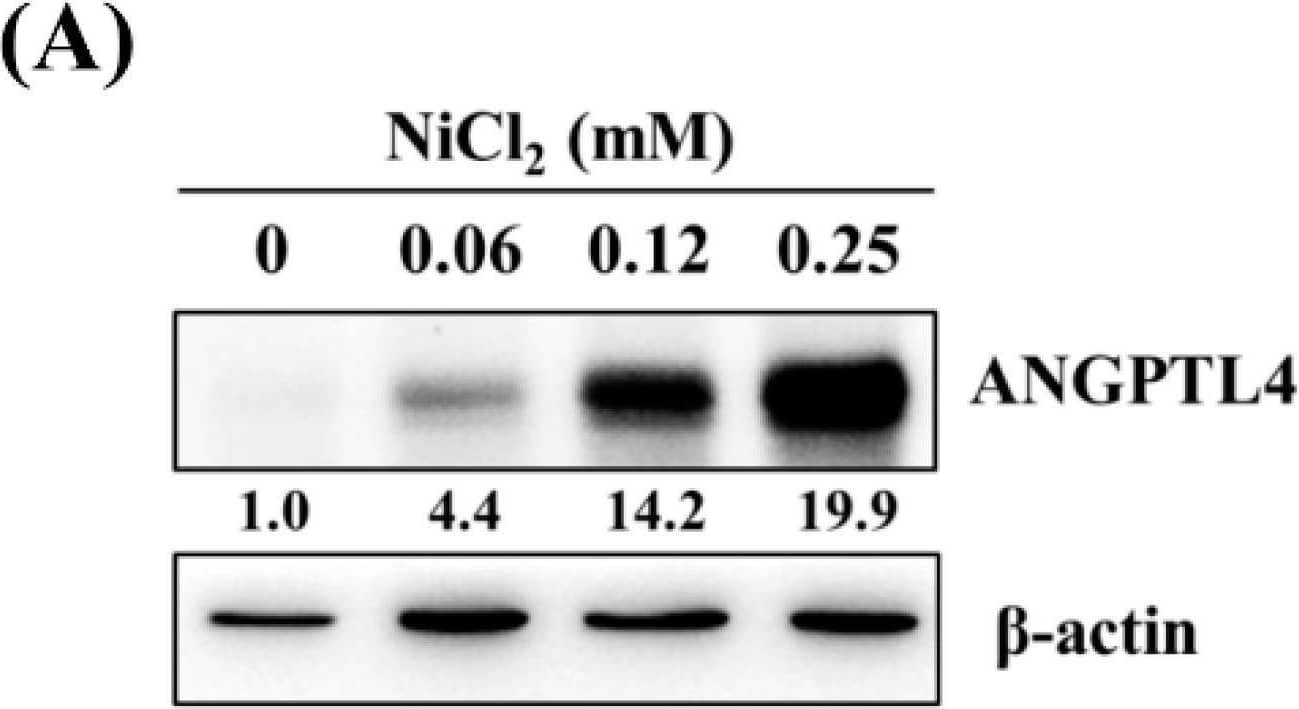
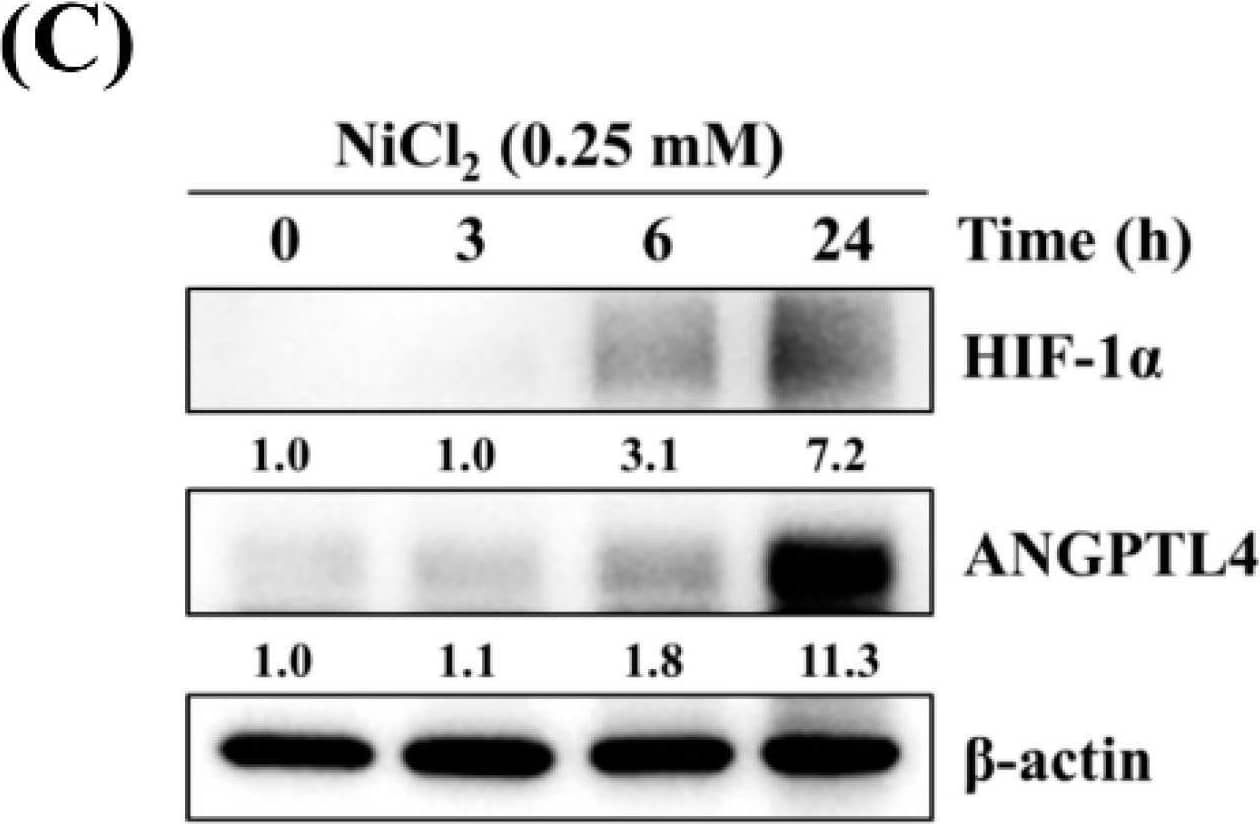
Detection of Angiopoietin-like Protein 4/ANGPTL4 by Western Blot NiCl2 activates the expression of ANGPTL4 and HIF1-alpha in BEAS-2B cells. (A) ANGPTL4 protein expression of BEAS-2B cells exposed to NiCl2 (0, 0.06, 0.12, and 0.25 mM) for 24 h was performed using western blotting. (B) The mRNA level of cells exposed to NiCl2 for 6 h was performed by real time-PCR. Significant differences from the untreated cells are indicated by ** p < 0.01 or *** p < 0.001 (C,D) Time-course analysis was also performed on BEAS-2B cells, which were incubated with 0.25 mM NiCl2 for 0, 3, 6, and 24 h. Image collected and cropped by CiteAb from the following open publication (https://pubmed.ncbi.nlm.nih.gov/31963541), licensed under a CC-BY license. Not internally tested by R&D Systems.
View Larger
Detection of Angiopoietin-like Protein 4/ANGPTL4 by Western Blot NiCl2 activates the expression of ANGPTL4 and HIF1-alpha in BEAS-2B cells. (A) ANGPTL4 protein expression of BEAS-2B cells exposed to NiCl2 (0, 0.06, 0.12, and 0.25 mM) for 24 h was performed using western blotting. (B) The mRNA level of cells exposed to NiCl2 for 6 h was performed by real time-PCR. Significant differences from the untreated cells are indicated by ** p < 0.01 or *** p < 0.001 (C,D) Time-course analysis was also performed on BEAS-2B cells, which were incubated with 0.25 mM NiCl2 for 0, 3, 6, and 24 h. Image collected and cropped by CiteAb from the following open publication (https://pubmed.ncbi.nlm.nih.gov/31963541), licensed under a CC-BY license. Not internally tested by R&D Systems.
View Larger
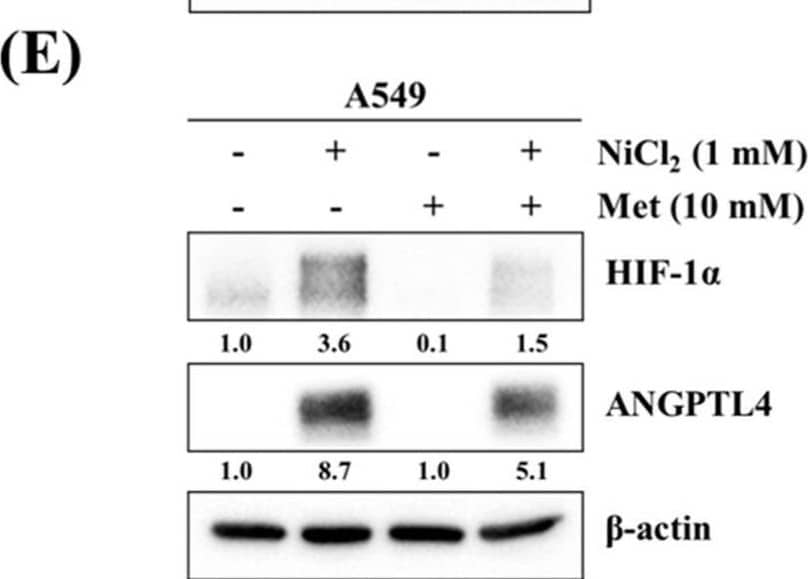
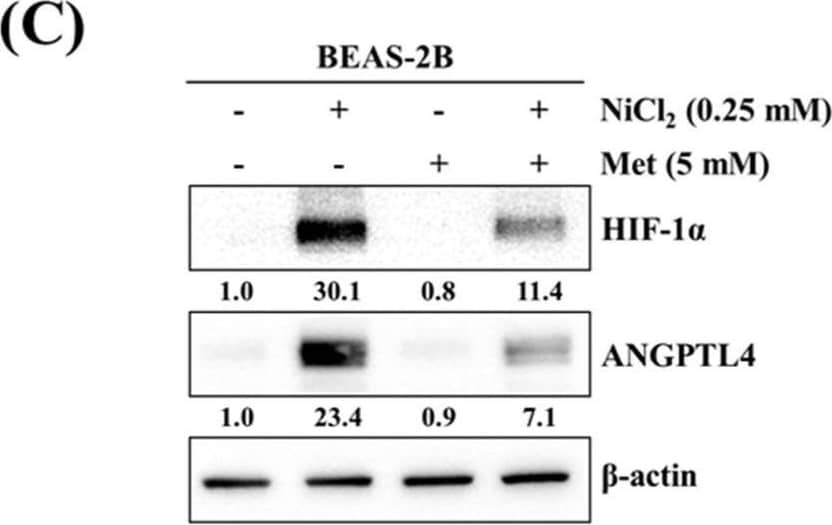
Detection of Angiopoietin-like Protein 4/ANGPTL4 by Western Blot Metformin represses NiCl2-induced ANGPTL4 activation and hypoxia-inducible factor-1 alpha (HIF-1 alpha ) expression. (A) Protein profiles were performed in NiCl2- and metformin-treated BEAS-2B cells for 48 h using a Proteome Profiler Human XL Oncology Array kit. (B) Seventeen gene expression values were generated by calculating the mean spot pixel density from the array that was affecting by NiCl2 and metformin. Data are presented as a fold change in each protein compared with the untreated group. (C,D) BEAS-2B and (E,F) A549 cells combined with 0.25 mM or 1 mM NiCl2 and 5 mM or 10 mM metformin for 24 h, western blotting and qPCR were used to determine protein and mRNA expression. (G) Migration of A549 cells across transwell filters for 24 h. A quantity of 10% FBS DMEM medium was placed in the bottom chamber containing various doses of ANGPTL4 recombinant protein. Bar graph: Quantitation of migrated cells/field. The results were obtained from three random fields per filter and represented the means ± SD. *** p < 0.001 (H) Cells were pretreated with 0, 2.5, and 5 mM metformin for 24 h and then seeded into transwell chambers without metformin; the bottom chamber contained 25 ng/mL ANGPTL4 recombinant protein. Image collected and cropped by CiteAb from the following open publication (https://pubmed.ncbi.nlm.nih.gov/31963541), licensed under a CC-BY license. Not internally tested by R&D Systems.
View Larger
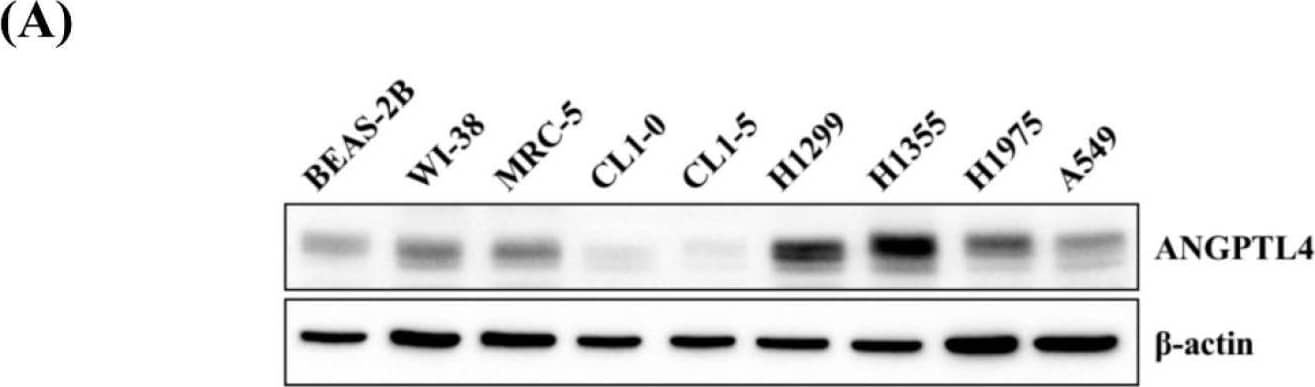
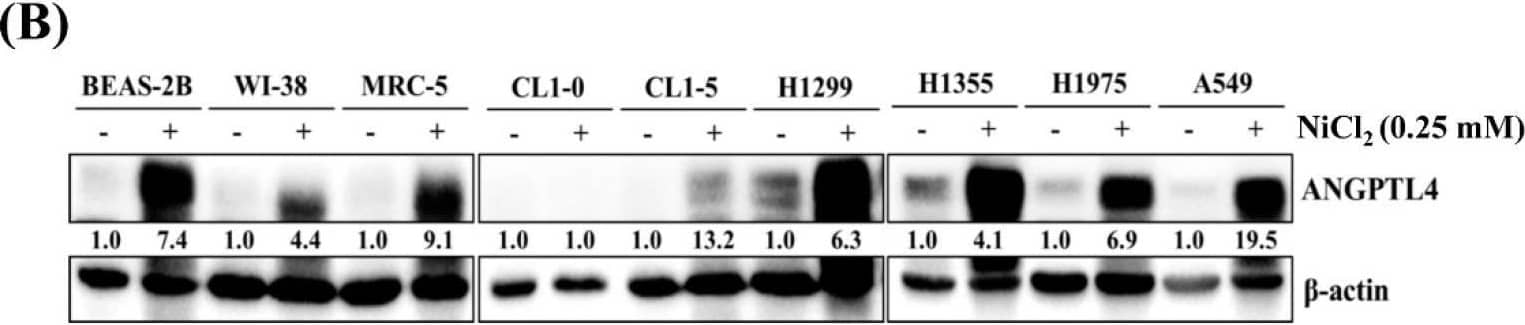
Detection of Angiopoietin-like Protein 4/ANGPTL4 by Western Blot Analysis of ANGPTL4 expression in lung cancer cell lines and normal cell lines exposed to NiCl2. (A) Protein expression of ANGPTL4 in various normal and tumour lung cells was performed using Western blot analysis. beta -actin was used as an internal control. (B) ANGPTL4 expression of NiCl2 derived from various cancer and normal cell lines by Western blotting and (C) real time-PCR. For protein levels, beta -actin was used as an internal control. The relative ratio of ANGPTL4 to beta -actin is shown. For mRNA levels, quantification of ANGPTL4 was normalised to beta -actin, with an average of three independent readings (mean ± SD). *** p < 0.001 versus control. Image collected and cropped by CiteAb from the following open publication (https://pubmed.ncbi.nlm.nih.gov/31963541), licensed under a CC-BY license. Not internally tested by R&D Systems.
View Larger
Detection of Angiopoietin-like Protein 4/ANGPTL4 by Western Blot Metformin represses NiCl2-induced ANGPTL4 activation and hypoxia-inducible factor-1 alpha (HIF-1 alpha ) expression. (A) Protein profiles were performed in NiCl2- and metformin-treated BEAS-2B cells for 48 h using a Proteome Profiler Human XL Oncology Array kit. (B) Seventeen gene expression values were generated by calculating the mean spot pixel density from the array that was affecting by NiCl2 and metformin. Data are presented as a fold change in each protein compared with the untreated group. (C,D) BEAS-2B and (E,F) A549 cells combined with 0.25 mM or 1 mM NiCl2 and 5 mM or 10 mM metformin for 24 h, western blotting and qPCR were used to determine protein and mRNA expression. (G) Migration of A549 cells across transwell filters for 24 h. A quantity of 10% FBS DMEM medium was placed in the bottom chamber containing various doses of ANGPTL4 recombinant protein. Bar graph: Quantitation of migrated cells/field. The results were obtained from three random fields per filter and represented the means ± SD. *** p < 0.001 (H) Cells were pretreated with 0, 2.5, and 5 mM metformin for 24 h and then seeded into transwell chambers without metformin; the bottom chamber contained 25 ng/mL ANGPTL4 recombinant protein. Image collected and cropped by CiteAb from the following open publication (https://pubmed.ncbi.nlm.nih.gov/31963541), licensed under a CC-BY license. Not internally tested by R&D Systems.
View Larger
Detection of Angiopoietin-like Protein 4/ANGPTL4 by Western Blot Analysis of ANGPTL4 expression in lung cancer cell lines and normal cell lines exposed to NiCl2. (A) Protein expression of ANGPTL4 in various normal and tumour lung cells was performed using Western blot analysis. beta -actin was used as an internal control. (B) ANGPTL4 expression of NiCl2 derived from various cancer and normal cell lines by Western blotting and (C) real time-PCR. For protein levels, beta -actin was used as an internal control. The relative ratio of ANGPTL4 to beta -actin is shown. For mRNA levels, quantification of ANGPTL4 was normalised to beta -actin, with an average of three independent readings (mean ± SD). *** p < 0.001 versus control. Image collected and cropped by CiteAb from the following open publication (https://pubmed.ncbi.nlm.nih.gov/31963541), licensed under a CC-BY license. Not internally tested by R&D Systems.
View Larger
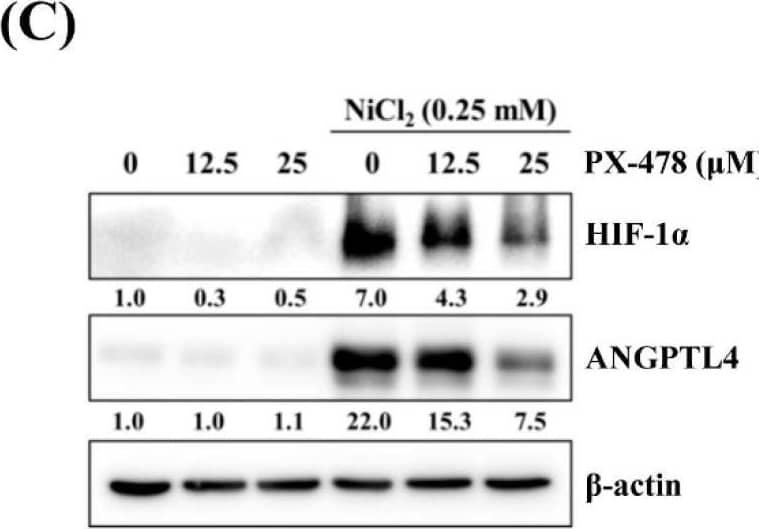
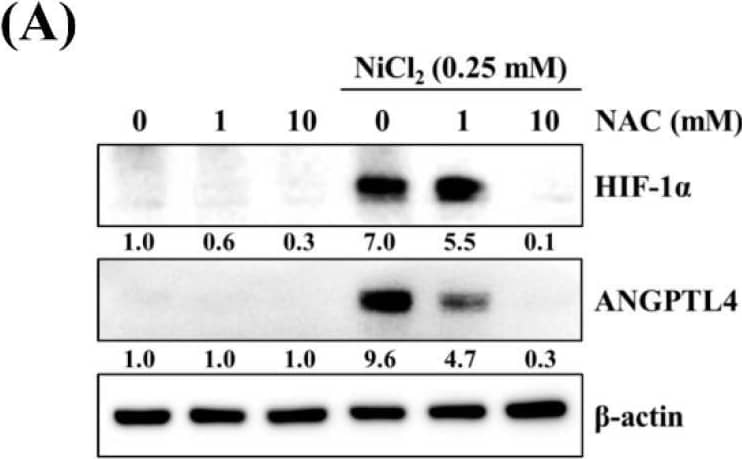
Detection of Angiopoietin-like Protein 4/ANGPTL4 by Western Blot HIF-1 alpha is involved in NiCl2-induced ANGPTL4 expression. (A) N-acetyl-L-cysteine (NAC), the ROS scavenger, inhibited NiCl2-upregulated ANGPTL4 expression. Determination of HIF-1 alpha and ANGPTL4 protein levels in BEAS-2B cells pretreated with NAC for 1 h and cultured under NiCl2 for 24 h. (B) qPCR was performed to detect ANGPTL4 mRNA levels. Data are shown relative to untreated cells after normalisation to beta -actin and reported as the mean ± SD of triplicate experiments. *** p < 0.001 compared with untreated cells; ###p < 0.001 compared with NiCl2-treated cells, as determined by two-tailed t tests. (C) Cells were pretreated with PTX-478, the HIF-1 alpha transcriptional inhibitor, for 1 h and then exposed to NiCl2 for 24 h. Western blotting and (D) qPCR were performed to determine the protein and mRNA expression. (E) BEAS-2B cells were treated with NiCl2 and metformin for 48 h after infecting with lentivirus carrying shGFP (vector control) or shHIF-1 alpha (clone no. #808 and #810). The protein levels of HIF-1 alpha, ANGPTL4, and beta -actin were determined while using Western blot analysis. beta -actin was used as the internal control. (F) Quantitative analysis of ANGPTL4 mRNA was performed using qPCR. The data are presented as the mean ± SD of triplicate experiments; a = p < 0.001 compared with shGFP untreated cells; b = p < 0.001 as compared with shGFP Ni-treated cells; c = p < 0.05 compared with shGFP Ni- and metformin cotreated cells. (G) HIF-1 alpha overexpression promoted ANGPTL4, which was then inhibited by metformin. Western blot analysis of BEAS-2B cells overexpressing pcDNA3 or HA-HIF-1 alpha -pcDNA3. Image collected and cropped by CiteAb from the following open publication (https://pubmed.ncbi.nlm.nih.gov/31963541), licensed under a CC-BY license. Not internally tested by R&D Systems.
View Larger
Detection of Angiopoietin-like Protein 4/ANGPTL4 by Western Blot HIF-1 alpha is involved in NiCl2-induced ANGPTL4 expression. (A) N-acetyl-L-cysteine (NAC), the ROS scavenger, inhibited NiCl2-upregulated ANGPTL4 expression. Determination of HIF-1 alpha and ANGPTL4 protein levels in BEAS-2B cells pretreated with NAC for 1 h and cultured under NiCl2 for 24 h. (B) qPCR was performed to detect ANGPTL4 mRNA levels. Data are shown relative to untreated cells after normalisation to beta -actin and reported as the mean ± SD of triplicate experiments. *** p < 0.001 compared with untreated cells; ###p < 0.001 compared with NiCl2-treated cells, as determined by two-tailed t tests. (C) Cells were pretreated with PTX-478, the HIF-1 alpha transcriptional inhibitor, for 1 h and then exposed to NiCl2 for 24 h. Western blotting and (D) qPCR were performed to determine the protein and mRNA expression. (E) BEAS-2B cells were treated with NiCl2 and metformin for 48 h after infecting with lentivirus carrying shGFP (vector control) or shHIF-1 alpha (clone no. #808 and #810). The protein levels of HIF-1 alpha, ANGPTL4, and beta -actin were determined while using Western blot analysis. beta -actin was used as the internal control. (F) Quantitative analysis of ANGPTL4 mRNA was performed using qPCR. The data are presented as the mean ± SD of triplicate experiments; a = p < 0.001 compared with shGFP untreated cells; b = p < 0.001 as compared with shGFP Ni-treated cells; c = p < 0.05 compared with shGFP Ni- and metformin cotreated cells. (G) HIF-1 alpha overexpression promoted ANGPTL4, which was then inhibited by metformin. Western blot analysis of BEAS-2B cells overexpressing pcDNA3 or HA-HIF-1 alpha -pcDNA3. Image collected and cropped by CiteAb from the following open publication (https://pubmed.ncbi.nlm.nih.gov/31963541), licensed under a CC-BY license. Not internally tested by R&D Systems.
Reconstitution Calculator
Preparation and Storage
- 12 months from date of receipt, -20 to -70 °C as supplied.
- 1 month, 2 to 8 °C under sterile conditions after reconstitution.
- 6 months, -20 to -70 °C under sterile conditions after reconstitution.
Background: Angiopoietin-like Protein 4/ANGPTL4
ANGPTL4, also known as PPAR gamma angiopoietin-related protein (PGAR), hepatic fibrinogen/angiopoietin-related protein (HFARP) and fasting-induced adipose factor (FIAF), is a secreted protein that shares structural homology with angiopoietins. It contains an N-terminal coiled-coil region that mediates covalent homo-oligomerization and a C-terminal fibrinogen-like domain. ANGPTL4 undergoes proteolytic processing and releases the C-terminal domain, which circulates as a monomer. At least 2 additional splice isoforms exist. ANGPTL4 is most highly expressed in adipose tissues. Its expression is up-regulated in endothelial cells and cardiomyocytes during hypoxia. ANGPTL4 is involved in the regulation of lipid and glucose metabolism. It has also been associated with angiogenesis. The amino acid sequence of human ANGPTL4 is 81%, 76% and 81% identical to that of porcine, mouse and canine ANGPTL4, respectively.
Product Datasheets
Citations for Human/Primate Angiopoietin-like Protein 4/ANGPTL4 Antibody
R&D Systems personnel manually curate a database that contains references using R&D Systems products. The data collected includes not only links to publications in PubMed, but also provides information about sample types, species, and experimental conditions.
16
Citations: Showing 1 - 10
Filter your results:
Filter by:
-
Angiopoietin-like protein 8 differentially regulates ANGPTL3 and ANGPTL4 during postprandial partitioning of fatty acids[S]
Authors: Yan Q. Chen, Thomas G. Pottanat, Robert W. Siegel, Mariam Ehsani, Yue-Wei Qian, Eugene Y. Zhen et al.
Journal of Lipid Research
-
ANGPTL4 Regulates Psoriasis via Modulating Hyperproliferation and Inflammation of Keratinocytes
Authors: Y Zuo, L Dai, L Li, Y Huang, X Liu, X Liu, X Duan, S Jiang, GM Deng, H Chen
Frontiers in Pharmacology, 2022-07-04;13(0):850967.
Species: Human
Sample Types: Cell Lysates
Applications: Western Blot -
Angiopoietin-like protein 8 differentially regulates ANGPTL3 and ANGPTL4 during postprandial partitioning of fatty acids[S]
Authors: Yan Q. Chen, Thomas G. Pottanat, Robert W. Siegel, Mariam Ehsani, Yue-Wei Qian, Eugene Y. Zhen et al.
Journal of Lipid Research
Species: Human
Sample Types: Serum
Applications: ELISA Capture -
Metformin Mitigates Nickel-Elicited Angiopoietin-Like Protein 4 Expression via HIF-1&alpha for Lung Tumorigenesis
Authors: YT Kang, WC Hsu, CC Ou, HC Tai, HT Hsu, KT Yeh, JL Ko
Int J Mol Sci, 2020-01-17;21(2):.
Species: Human
Sample Types: Cell Lys
Applications: Western Blot -
Effect of diet-induced weight loss on angiopoietin-like protein 4 and adipose tissue lipid metabolism in overweight and obese humans
Authors: BW van der Ko, RG Vink, JWE Jocken, NJT Roumans, GH Goossens, ECM Mariman, MA van Baak, EE Blaak
Physiol Rep, 2018-07-01;6(13):e13735.
Species: Human
Sample Types: Plasma
Applications: ELISA Development (Capture) -
Plasma angiopoietin-like 4 is related to phospholipid transfer protein activity in diabetic and non-diabetic subjects: role of enhanced low grade inflammation
Authors: EG Gruppen, S Kersten, RPF Dullaart
Lipids Health Dis, 2018-03-27;17(1):60.
Species: Human
Sample Types: Plasma
Applications: ELISA Development (Capture) -
Regulation of angiopoietin-like 4 and lipoprotein lipase in human adipose tissue
Authors: W Dijk, S Schutte, EO Aarts, IMC Janssen, L Afman, S Kersten
J Clin Lipidol, 2018-02-17;0(0):.
Species: Human
Sample Types: Plasma
Applications: ELISA Capture -
Buyang Huanwu Tang improves denervation-dependent muscle atrophy by increasing ANGPTL4, and increases NF-?B and MURF1 levels
Authors: L Zhou, Y Huang, H Xie, X Mei
Mol Med Rep, 2017-12-19;0(0):.
Species: Rat
Sample Types: Tissue Homogenates
Applications: Western Blot -
Hypoxia-induced ANGPTL4 sustains tumour growth and anoikis resistance through different mechanisms in scirrhous gastric cancer cell lines
Authors: K Baba, Y Kitajima, S Miyake, J Nakamura, K Wakiyama, H Sato, K Okuyama, H Kitagawa, T Tanaka, M Hiraki, K Yanagihara, H Noshiro
Sci Rep, 2017-09-11;7(1):11127.
Species: Human
Sample Types: Cell Lysates
Applications: Western Blot -
ANGPTL4 promotes the progression of cutaneous melanoma to brain metastasis
Authors: S Izraely, S Ben-Menach, O Sagi-Assif, T Meshel, DM Marzese, S Ohe, I Zubrilov, M Pasmanik-C, DSB Hoon, IP Witz
Oncotarget, 2017-07-05;8(44):75778-75796.
Species: Human
Sample Types: Cell Lysates
Applications: Western Blot -
Short-chain fatty acids stimulate angiopoietin-like 4 synthesis in human colon adenocarcinoma cells by activating peroxisome proliferator-activated receptor gamma.
Authors: Alex S, Lange K, Amolo T, Grinstead J, Haakonsson A, Szalowska E, Koppen A, Mudde K, Haenen D, Al-Lahham S, Roelofsen H, Houtman R, van der Burg B, Mandrup S, Bonvin A, Kalkhoven E, Muller M, Hooiveld G, Kersten S
Mol Cell Biol, 2013-01-22;33(7):1303-16.
Species: Human
Sample Types: Cell Culture Supernates
Applications: ELISA Development (Detection) -
Caloric restriction and exercise increase plasma ANGPTL4 levels in humans via elevated free fatty acids.
Authors: Kersten S, Lichtenstein L, Steenbergen E, Mudde K, Hendriks HF, Hesselink MK, Schrauwen P, Muller M
Arterioscler. Thromb. Vasc. Biol., 2009-04-02;29(6):969-74.
Species: Human
Sample Types: Cell Culture Supernates
Applications: ELISA Development -
Knockdown of angiopoietin-like 4 inhibits the development of human gastric cancer
Authors: Jin-Wu Chen, Ying-Jia Luo, Zheng-Fei Yang, Li-Qiang Wen, Lin Huang
Oncology Reports
-
Regulation and clinical significance of the hypoxia-induced expression of ANGPTL4 in gastric cancer.
Authors: Kubo H, Kitajima Y, Kai K et al.
Oncol Lett
-
Inflammation increases plasma angiopoietin-like protein 4 in patients with the metabolic syndrome and type 2 diabetes
Authors: Nathanja Tjeerdema, Anastasia Georgiadi, Jacqueline T Jonker, Marjolijn van Glabbeek, Reza Alizadeh Alizadeh Dehnavi, Jouke T Tamsma et al.
BMJ Open Diabetes Research & Care
-
ANGPTL4 mediates shuttling of lipid fuel to brown adipose tissue during sustained cold exposure
Authors: Wieneke Dijk, Markus Heine, Laurent Vergnes, Mariëtte R Boon, Gert Schaart, Matthijs K C Hesselink et al.
eLife
FAQs
No product specific FAQs exist for this product, however you may
View all Antibody FAQsReviews for Human/Primate Angiopoietin-like Protein 4/ANGPTL4 Antibody
There are currently no reviews for this product. Be the first to review Human/Primate Angiopoietin-like Protein 4/ANGPTL4 Antibody and earn rewards!
Have you used Human/Primate Angiopoietin-like Protein 4/ANGPTL4 Antibody?
Submit a review and receive an Amazon gift card.
$25/€18/£15/$25CAN/¥75 Yuan/¥2500 Yen for a review with an image
$10/€7/£6/$10 CAD/¥70 Yuan/¥1110 Yen for a review without an image
