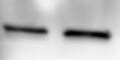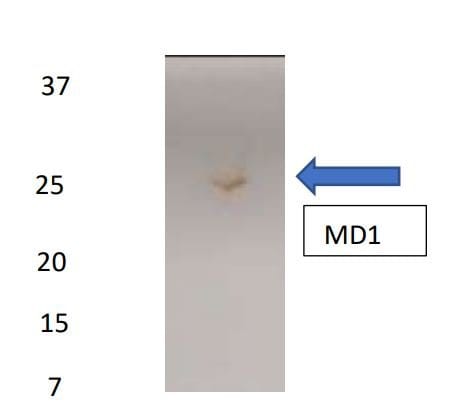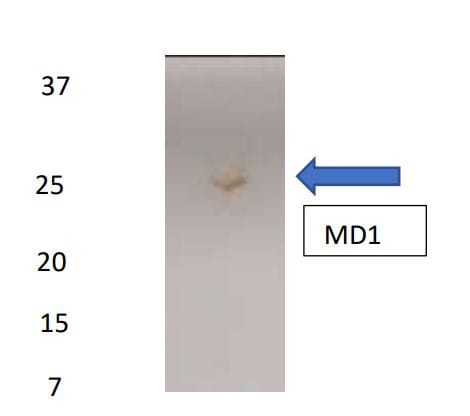
MD-1 is a secreted glycoprotein that is associated with RP105 and is required for efficient RP105 cell surface expression and function (1‑4). RP105 is a type I transmembrane glycoprotein with extracellular leucine-rich repeats (LRR) typically found in Toll-like receptor (TLR) family members. However, RP105 has a short cytoplasmic tail and lacks the Toll-IL-1 R (TIR) domain that defines the IL-1 R/TLR superfamily (1‑3). RP105 plays an important role in B-cell activation by bacterial lipopolysaccharide (LPS). It is expressed primarily on mature B cells, dendritic cells and macrophages (3).
Human MD-1 cDNA encodes a 162 amino acid (aa) precursor protein with a putative 19 aa signal peptide and two potential N-linked glycosylation sites. It shares 38% and 66% amino acid sequence identity with chicken and mouse MD-1 respectively (1, 2). MD-1 is mainly expressed in spleen, and also detectable in liver, brain, thymus, and kidney. The cell surface RP105/MD-1 complex, in conjunction with TLR4, mediates the innate immune response to LPS in B cells. Activation of the RP105 complex has been shown to protect against apoptosis, induce B-cell proliferation and upregulate B7.2, a co-stimulatory molecule (4, 5). Since MD-1 is also expressed in liver and brain where RP105 is absent, MD-1 may also be associated with other LRR-containing molecules, or have additional functions outside the immune system (5).